Tag Archives: immigrant visa

Form I-864: Key to Meeting the Financial Requirement for Permanent Residence and Avoiding a Public Charge Determination

Section 212(a)(4) of the Immigration and Nationality Act (INA) prohibits you from receiving an immigrant visa or adjusting to permanent residence if you are likely, at any time, to become a public charge. To show you are not inadmissible on this ground, a Form I-864, Affidavit of Support, filed on your behalf is required in most family-based and some employment-based immigrant visa or adjustment cases.
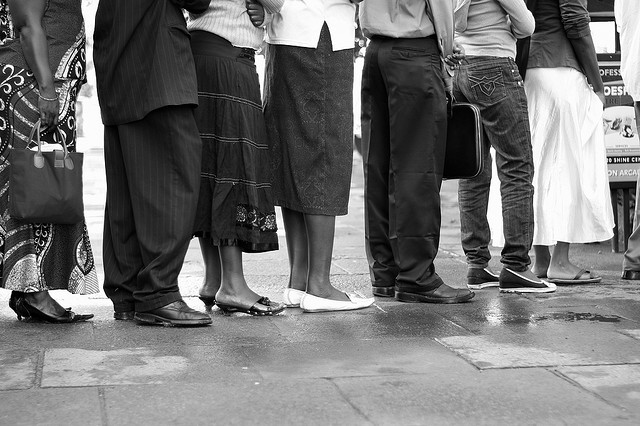

What Factors are Considered When Determining Whether A Person is Likely to Become a Public Charge? 

“Public charge” means you are likely to become primarily dependent on the U.S. government for subsistence, either through receipt of public cash assistance for income maintenance or institutionalization for long-term care at government expense.

Totality of the Circumstances

U.S. Consulates and USCIS consider certain factors, including your age, health, family status, assets, resources, financial status, education and skills. The officer weighs the positive and negative factors and examines the “totality of the circumstances” when making a public charge determination.

Under the totality of the circumstances test, a person “who is incapable of earning a livelihood, who does not have sufficient funds in the United States for his support, and has no person in the United States willing and able to assure that he will not need public support is excludable as likely to become a public charge.”

Receipt of Cash Benefits

If you have received certainly publicly funded benefits, the officer takes this into account. The types of cash benefits received that could lead the officer to find you will become a public charge include:

  • Supplemental Security Income (SSI) under Title XVI of Social Security Act
  • Temporary Assistance for Needy Families (TANF) cash assistance (part A of Title IV of the Social Security Act–the successor to the AFDC program) (Note: Non cash benefits under TANF such as subsidized child care or transit subsidies cannot be considered and non-recurrent cash payments for crisis situations cannot be considered for evidence of public charge)
  • State and local cash assistance programs that provide benefits for income maintenance (often called “General Assistance” programs)
  • Programs (including Medicaid) supporting individuals who are institutionalized for long-term care (e.g., in a nursing home or mental health institution). (Note: costs of incarceration for prison are not considered for public charge determinations)

Receiving cash assistance for income maintenance and institutionalization for long-term care (e.g nursing home) at government expense is also considered, but in the context of the totality of the circumstances.

Public benefits that one family  member receives are not attributed to other family members, unless the cash benefits amount to the sole support of the family.

This list is not exhaustive. The officer will consider receipt of any cash benefits not listed above by examining the totality of the circumstances. A public charge determination, however, cannot be based solely on previous (or current) receipt of public benefits.

Non-cash or special-purpose cash benefits are generally not taken into account as they are usually supplemental and do not make you primarily dependent on the government for subsistence. Examples are:

  • Medicaid and other health insurance and health services, other than support for long-term institutional care
  • Children’s Health Insurance Program (CHIP)
  • Nutrition programs, including Food Stamps, the Special Supplemental Nutrition Program for Women, Infants and Children (WIC), the National School Lunch and School Breakfast Program, and other supplementary and emergency food assistance programs
  • Housing benefits
  • Child care services
  • Energy assistance, such as the Low Income Home Energy Assistance Program (LIHEAP)
  • Emergency disaster relief
  • Foster care and adoption assistance
  • Educational assistance (such as attending public school), including benefits under the Head Start Act and aid for elementary, secondary, or higher education
  • Job training programs
  • Transportation vouchers
  • In-kind, community-based programs, services, or assistance (such as soup kitchens, crisis counseling and intervention, and short-term shelter)
  • State and local programs that serve similar purposes as the federal programs listed above (e.g. “Medi-Cal” in California).
  • Federal, state, or local programs in which benefits are paid in-kind, by voucher or by any means other than cash

In addition, cash payments that have been earned, such as Social Security benefits, old age survivors disability insurance (OASDI), government pensions, and veterans’ benefits, are not considered. Unemployment compensation is also not taken into account for public charge purposes.

Form I-864, Affidavit of Support

By itself, the absence or insufficiency of an affidavit of support — when required by the law governing certain immigration benefits, such as most family-based immigrant visa and adjustment applications —  can lead the officer to find you are likely to become a public charge.

When is a Form I-864, Affidavit of Support, Required? 

The Form I-864 is required for most family-based immigrants and some employment-based immigrants to show that they have adequate means of financial support and are unlikely to rely on the U.S. government for subsistence.

Normally, you must submit a Form I-864, Affidavit of Support, completed by the petitioner to support your immigrant visa or adjustment of status application if you fall in of any of these categories:

  • Immediate relatives (parents, spouses, and unmarried children under the age of 21, including orphans) of U.S. citizens
  • Relatives who qualify for immigration under one of the family based preferences:
    • First Preference: Unmarried, adult sons and daughters of U.S. citizens (Adult means 21 years of age or older)
    • Second Preference: Spouses of permanent residents and the unmarried sons and daughters (regardless of age) of permanent residents and their unmarried children
    • Third Preference: Married sons and daughters of U.S. citizens, their spouses and their unmarried minor children
    • Fourth Preference: Brothers and sisters of adult U.S. citizens, their spouses and their unmarried minor children
  • Employment based preference immigrants when a U.S. citizen or permanent resident relative (spouse, parent, child, adult son or daughter, brother or sister) filed the immigrant visa petition, or the relative has a significant ownership interest (5% or more) in the entity that filed the petition.
[NOTE: Although the Form I-864 is not required, by law, in a K-1 visa application of a fiance(e) of a U.S. citizen, many U.S. Consulates will request proof of financial support to ensure the applicant will not become a public charge in the United States. In any event, a K-1 visa holder who then enters the U.S. and marries the U.S. citizen will need to submit a Form I-864 and proof of financial support from the citizen petitioner as part of the Form I-485 adjustment to permanent residence application.]

You do not need to submit an I-864, even if you fall in any of the above categories, if you can show you:

  • Already worked 40 qualifying quarters as defined in Title II of the Social Security Act
  • Can be credited with 40 qualifying quarters as defined in Title II of the Social Security Act
  • Are the child of a U.S. citizen and if admitted for permanent residence on or after February 27, 2001, would automatically acquire citizenship under Section 320 of the Immigration and Nationality Act, as amended by the Child Citizenship Act of 2000.

What is the Form I-864, Affidavit of Support, and Who Submits It? 

The I-864 serves to prove you have the financial means to live in the U.S. without needing welfare or financial benefits from the U.S. government.

The U.S. citizen or permanent resident who filed the Form I-130 immigrant petition for you must be the sponsor who signs and submits the I-864 on your behalf. Sponsors are also required to file their federal tax returns for the three most recent years (if required by  law) and submit their last year’s tax returns with the I-864, regardless of their income level. In some situations, a joint sponsor or substitute sponsor is required and allowed.

The I-864 is a legally enforceable contract with the U.S. Government in which the sponsor, joint sponsor or substitute sponsor agrees to support the immigrant at a minimum annual income level. In the contract, they also agree to reimburse any federal or state agency that provides a means-tested benefit to the immigrant.

The sponsored immigrant may sue a sponsor, joint sponsor or substitute sponsor to enforce the contract to provide financial support. If the immigrant ever receives a means-tested benefit, the agency that provided it can also seek reimbursement from the sponsor, joint sponsor or substitute sponsor.

The contractual obligations under the I-864 begins when the immigrant visa or green card is granted. The affidavit of support may be withdrawn only before permanent residence is granted.

The contractual obligations continue until the sponsored immigrant becomes a U.S. citizen, or can be credited with 40 qualifying quarters of work (generally 10 years of work) in the United States. The sponsor, joint sponsor and substitute sponsor’s obligations also end if they or the sponsored immigrant dies or if the sponsored immigrant ceases to be a lawful permanent resident.

What are the Basic I-864 Requirements?

A sponsor, joint sponsor, and substitute sponsor must:

  • Be a U.S. citizen or national or a permanent resident.
  • Be at least 18 years old.
  • Be domiciled (live) in the United States or a territory or possession.  (If they live abroad, they may show their residence abroad is temporary and they still have a domicile in the U.S. or will establish a domicile in the U.S. on or before the date of the principal intending immigrant’s admission or adjustment of status)
  • Meet all of the financial requirements

Sponsor

Normally, sponsors must show their current annual household income is at least 125% of the federal poverty level for their household size.

The federal poverty level, per household size, is set once a year and is shown in the Form I-864, Poverty Guidelines.

The household size includes the sponsor, the sponsor’s spouse (even if they are separated or live separately), the sponsor’s unmarried children under 21 (regardless of where they live), any person listed as a dependent on the last tax return, the intending immigrant, and any derivative beneficiaries who are accompanying the principal beneficiary (i.e. immigrating at the same time or within six months of the principal immigrant).

Joint sponsor

When sponsors do not meet the minimum income requirement, they may use alternatives. The most common way is to submit a separate Form I-864 from a joint sponsor who meets the income requirement independently for his or her household size, which includes the intended immigrant. .

A joint sponsor must meet all the same requirements as the sponsor, except the joint sponsor does not have to be related to the immigrant.

Each immigrant visa or adjustment applicant may have only one joint sponsor. In in family-based preference category cases involving a principal beneficiary and at least one accompanying derivative beneficiary, the sponsor may use up to two joint sponsors.

Lawsuits against joint sponsors to enforce the I-864  do not usually arise unless there is a dissolution of marriage between the sponsor and immigrant or the sponsor is completely unable or unwilling to support the immigrant.

Substitute sponsor

If the petitioner (sponsor) dies after approval of the visa petition, and USCIS agrees to allow the immigrant visa or adjustment process to continue, a substitute sponsor must file a separate Form I-864.

In addition to meeting the same requirements as the sponsor, substitute sponsors must be related to the intending immigrant in one of the following ways:

  • Spouse
  • Parent
  • Mother-in-law
  • Father-in-law
  • Sibling
  • Child (if at least 18 years of age)
  • Son
  • Daughter
  • Son-in-law
  • Daughter-in-law
  • Sister-in-law
  • Brother-in-law
  • Grandparent
  • Grandchild
  • Legal guardian of the beneficiary

Substitute sponsors exist only when the sponsor has died. As such, lawsuits to enforce the I-864 against substitute sponsors arise only in the event of a sponsor’s death.

***

For more information, read our related article, Form I-864: Alternatives to Meeting the Financial Requirements for Permanent Residence and Avoiding a Public Charge Determination.

The proper filing of a Form I-864 is key to meeting the financial requirement for permanent residence and avoiding a public charge determination in most immigrant visa or adjustment cases. The I-864 instructions can be confusing and do not always provide answers to questions you have about the public charge issue.

The Form I-864EZ is a shorter version of the Form I-864 and is used only if three conditions are met: (1) The sponsor is the person who filed or is filing a Form I-130, Petition for Alien Relative, for the sponsored immigrant; (2). The sponsored immigrant is the only person listed on the Form I-130; and (3) The income being used to qualify is based entirely on the sponsor’s salary or pension and is shown on one or more Internal Revenue Service (IRS) Form W-2s provided by employers or former employers.

Consult an immigration attorney to receive full guidance on the financial aspects of becoming a permanent resident or sponsoring an immigrant. While immigration attorneys offer dual representation to both the petitioner (sponsor) and intending immigrant, many will not provide advice to joint sponsors and other third parties whose income is being used, due to a potential conflict of interest.

###

This article provides general information only. It is based on law, regulations and policy that are subject to change. Do not consider it as legal advice for any individual case or situation. Each legal case is different and case examples do not constitute a prediction or guarantee of success or failure in any other case. The sharing or receipt of this information does not create an attorney-client relationship.

SUBSCRIBE           CONTACT

Photo by: GotCredit

Coming to America to Get Married and Get a Green Card: B-2 or K-1 Visa?

In this video, immigration attorney Dyan Williams describes two types of nonimmigrant visas: B-2 visitor visa and K-1 fiancé(e) visa. She summarizes what you need to know about each visa when using either to come to the U.S., get married to a U.S. citizen or permanent resident, and apply for a green card.

Read about Coming to America to Get Married and Get a Green Card: B-2 or K-1 visa?  here.

For more information, read these articles:

Contact Dyan for specific advice and guidance on the B-2 visitor visa or K-1 fiance(e) visa to green card process.

This video provides general information and is for educational purposes only. Do not consider it as legal advice for any individual case or situation. Immigration laws, regulations and policies are subject to change. The sharing or receipt of this information does not create an attorney-client relationship.

SUBSCRIBE           CONTACT

Changes to the Visa Bulletin: Understanding the Two Filing Charts

queue

On October 1, 2015, the U.S. Department of State made changes to the monthly Visa Bulletin so there are now two different dates to track: the Application Final Action Dates (AFAD) and the Dates for Filing Applications (DFA).  The Bulletin revisions are meant to improve the backlog in the family-sponsored preference and employment-sponsored preference categories, where the demand for immigrant visas can – and often do – exceed the supply each year. In some categories, the wait for a visa to become available is as long as 5 to 10+ years.

Advantages with the New System

The priority date marks the applicant’s place in the visa queue. In the family-based categories, the priority date is the date USCIS received the Form I-130, Petition for Alien Relative or in certain cases, the Form I-360, Petition for Amerasian, Widow(er) or Special Immigrant.

In employment-based categories, it’s the date the U.S. Department of Labor (DOL) received the application for alien labor certification or the date USCIS received the Form I-140, Immigrant Petition for Alien Worker (if no alien labor certification is required). In certain cases, it’s the date USCIS received the Form I-360 petition (EB-4, fourth preference category) or the Form I-526, Immigrant Petition by Alien Entrepreneur (EB-5, fifth preference category).

The AFAD chart is consistent with previous Visa Bulletins under the old system. AFADs are the cut-off dates that determine when an immigrant visa becomes available to Form DS-260, Immigrant Visa applicants or Form I-485, Adjustment of Status applicants, depending on their priority date, preference category, and country of chargeability.

The DFA chart is part of the new system and was first introduced in the October 2015 Visa Bulletin. DFAs are the cut-off dates that determine when Immigrant Visa applicants – depending on their priority date, preference and category – should receive notice from the DOS’ National Visa Center (NVC) instructing them to submit their documents for consular processing.

Each month, U.S. Citizenship & Immigration Services (USCIS) also determines whether eligible applicants in the U.S. may use the DFA chart, instead of the AFAD chart, for filing their I-485 applications. Current information is posted on the USCIS website at www.uscis.gov/visabulletininfo. When USCIS finds there are more immigrant visas available for the fiscal year than there are known applicants for such visas, USCIS will state on its website that I-485 applicants may use the DFA chart in the Visa Bulletin.

In most cases, the DFAs are later than the AFADs. Example: In the December 2015 Visa Bulletin, the DFA for the family-sponsored, second preference, F2A category is March 1, 2015 (“01MAR15”). Meanwhile, the AFAD for this same category is June 15, 2014 (“15JUN14”). If the applicant’s priority date is April 30, 2015, or otherwise earlier than the DFA, he may file the I-485 with USCIS in December 2015, even though an immigrant visa is not yet available. Under the old system, the applicant’s priority date must have been June 14, 2014, or otherwise earlier than the AFAD, before he could file the I-485 in December.

In most cases, the new system allows Immigrant Visa applicants and sometimes Adjustment of Status applicants to get a head start on filing for permanent residence.

Even if the priority date is not current in the AFAD chart, an Immigrant Visa applicant may use the DFA chart to submit required forms and documents following receipt of instructions from the NVC.

If USCIS determines the DFA chart may be used in a particular month, it will accept I-485 adjustment applications when the applicant’s priority date is earlier than the cut-off date in the DFA chart. I-485 applicants may also file for and receive an employment authorization document (EAD) and advance parole (travel document).

Those who are stuck in the employment-based backlog have greater job mobility with an EAD that is based on a pending I-485. In particular, once an employment-based I-485 application is pending 180 days or more, “portability” rights generally allow the individual to change employers, as long as the new job is in the same or a similar occupation.

Limitations of the New System

Unless otherwise stated on the USCIS website, individuals seeking green cards within the U.S. must normally use the AFAD chart for determining when they may file their I-485 applications. When USCIS finds there are fewer immigrant visas available for the fiscal year than there are known applicants for such visas, I-485 applicants must use the AFAD chart, instead of the DFA chart, to file their applications.

All applicants still have to wait for the AFAD to become current before the green card or immigrant visa can be issued.

USCIS will not adjudicate or approve the I-485 until the priority date becomes current or is earlier than the cut-off date in the AFAD chart. Even if the applicant filed early under the DFA chart, it could be another year or so before he receives an I-485 decision or green card. A final decision on Immigrant Visa applications also cannot be taken until the AFAD becomes current.

When applicants file their I-485 or Immigrant Visa application early under the DFA chart, material changes may occur while they are waiting for the AFAD to become current. They might get arrested, charged and convicted of a crime that affects their eligibility for a green card. Waivers are available for only certain criminal-related grounds of inadmissibility in only some cases.

Furthermore, failure to report material changes in one’s case to USCIS or the U.S. Consulate may be construed as fraud or willful misrepresentation to gain immigration benefits. This is a lifetime bar to obtaining permanent residence. Fraud/misrepresentation waivers are available only to applicants with a U.S. citizen or permanent resident spouse or parent who would suffer extreme hardship if the applicant was not admitted to the U.S.

Generally, all I-485 applicants must submit a Form I-693, Report of Medical Examination and Vaccination Record, completed by a designated U.S. civil surgeon.

If the Form I-693 is filed with the I-485 under the DFA chart, it may expire by the time the AFAD is current and USCIS can issue a final decision on the I-485. To avoid re-doing the immigration medical examination, I-485 applicants might want to wait until receiving a Request for Evidence (RFE) or until the I-485 interview to submit the Form I 693.

The revised procedures in the Visa Bulletin does not change eligibility requirements for I-485 and Immigrant Visa applicants. For example, individuals must still be in lawful nonimmigrant status (e.g. H-1B or F-1) when they file an I-485 application in the family-sponsored or employment-based category. Those who are out of status in the U.S. normally do not qualify for adjustment of status. Instead, they must depart the U.S. to apply for an immigrant visa.

If they depart the U.S. after accruing more than 180 days to less than 1 year of unlawful presence, they trigger a 3-year bar to re-entry. The bar is 10 years if the unlawful presence lasted 1 year or more. To be excused from the 3/10 year bar so they may obtain an immigrant visa before the 3/10 years pass, they must apply for and receive an I-601 waiver. Getting the waiver requires them to show a U.S. citizen or permanent resident spouse or parent will suffer extreme hardship if they are not admitted to the U.S.

A pending I-485 generally provides “authorized stay” even if the person falls out status – as long as the I-485 is non-frivolous and was timely and properly filed with USCIS. But when possible, it is best to maintain or extend lawful nonimmigrant status (e.g. H-1B or L-1) until USCIS approves the I-485. Failure to maintain status leaves the person with no safety net if USCIS later decides to deny the I-485 or revoke the approval of the underlying visa petition.

The Visa Bulletin Matters to Green Card Applicants in the Family-Sponsored and Employment-Based Preference Categories, But Not to Immediate Relatives of U.S. Citizens 

The Immigration and Nationality Act (INA) limits the number of immigrant visas that may be issued, each year, to foreign nationals seeking to become lawful permanent residents in the family-sponsored and employment-based preference categories. Visas in these preference categories are not always available.

When demand exceeds supply of visas for a given year in a given category or country, a visa queue (backlog) forms. The DOS distributes the visas based on the applicant’s priority date, preference category, and country of chargeability.

When the priority date is earlier than the cut-off date in the AFAD chart, or the AFAD is “current” (“C”) for the preference category and country of chargeabilty, prospective immigrants can receive a final decision on their I-485 or immigrant visa applications.

If the Visa Bulletin shows “U” in a category, immigrant visas are temporarily unavailable to all applicants in that preference category and/or country of chargeability.

Immigrant visas for “immediate relatives” of U.S. citizens, however, are unlimited. An immigrant visa is always available to:

  • Spouses of U.S. citizens
  • Unmarried, minor children (under age 21) of U.S. citizens
  • Parents of adult U.S. citizens (age 21 or older)
  • Widows or widowers of U.S. citizens if the U.S. citizen filed a Form I-130 immigrant petition before his or her death or if the widow(er) files a Form I-360, self-petition within 2 years of the citizen’s death

When Possible, It’s Better to File When the DFA Is Current, Instead of Wait for the AFAD to Become Current

You don’t have to file your I-485 or Immigrant Visa application when the DFA is current. But there are several advantages to getting an early start. Filing under the DFA chart helps to ensure cases are ready to be approved when the AFAD becomes current.

Like AFADs, DFAs can roll back instead of move forward. Still, filing early provides some protection against visa retrogression. This is when a priority date that is current one month will not be current the next month, or the cut-off date will move backwards to an earlier date. Visa retrogression occurs when the visas have been used up or is expected to run out soon in the fiscal year. A new supply of visa numbers become available at the start of the fiscal year, October 1, but the priority dates might still take a while to return to where they were before retrogression.

While the new system does not involve any substantive changes in immigration law, it includes procedural changes that help to ease the backlog and provide some advantages to prospective immigrants.

###

This article provides general information only. It is based on law, regulations and policy that are subject to change. Do not consider it as legal advice for any individual case or situation. Each legal case is different and case examples do not constitute a prediction or guarantee of success or failure in any other case. The sharing or receipt of this information does not create an attorney-client relationship.

SUBSCRIBE           CONTACT

Photo by: Xiaojun Deng

Applying for a Green Card Following Entry Into the U.S. as a Visitor

Foreign nationals who enter the U.S. on a B-1/B-2 visitor visa or on the Visa Waiver Program (VWP) may file for their green card within the U.S. – instead of apply for their immigrant visa aboard – if they fit in the Immediate Relatives category. A common example is when the person enters into a bona fide marriage to a U.S. citizen following entry to the U.S. as a visitor. But the green card applicant’s true intentions when he applied for the visitor visa (or ESTA) or requested entry in visitor status may be called into question.

The visitor visa and VWP program allow foreign nationals to enter the U.S. for tourism or business for a temporary period. Using the visitor visa or VWP to enter the U.S. with the specific intent of immigrating to the U.S. carries risks and consequences.

Overstaying their non-immigrant status in the U.S., in and of itself, does not prevent immediate relatives from adjusting to permanent resident status. Immediate relatives include the U.S. citizen’s spouse, children under age 21, and parents (if the U.S. citizen is 21 or older). In addition, a general desire to immigrate is generally fine. Problems, however, arise when there is willful misrepresentation about the purpose of the trip.

What are the risks and consequences of the visitor-to-green card holder option? 

1. Foreign national may be charged with fraud or willful misrepresentation to obtain immigration benefits

Immigration authorities expect fiancé(e)s of U.S. citizens to apply for a K-1 visa and spouses, parents and minor children of U.S. citizens to apply for an immigrant visa at the U.S. Consulate abroad, rather than enter the U.S. as a visitor and then apply for a marriage-based green card.

The U.S. Department of State adopted a 30/60 day rule when a foreign national violates his nonimmigrant status.  When a foreign national marries a U.S. citizen and takes up residency in the United States within 30 days of entry, the DOS presumes that he misrepresented his intent in seeking a visitor visa or entry. If the marriage or green card application occurred after 30 days but within 60 days of entry, the DOS does not presume there was misrepresentation. But if the facts provide a reasonable basis to believe the foreign national misrepresented his intent, the DOS allows him to present rebuttal evidence. If the marriage or green card application occurred after 60 days, the DOS does not consider such conduct to constitute fraud or willful misrepresentation to obtain immigration benefits.

USCIS is a separate agency from the DOS and the Board of Immigration Appeals has held that immediate relatives are exempt from the 30/60 day rule. In other words, immediate relatives of U.S. citizens who wish to apply for adjustment of status may do so at any time, even within 30 days of entry into the U.S.

[See updates below regarding the switch from 30/60 day rule to 90 day rule.]

Nevertheless, USCIS is often persuaded by and frequently follows the DOS policy. During the adjustment of status process, USCIS may find that the applicant misused the visitor visa or VWP by claiming to be a mere visitor at the U.S. port of entry, when in fact he intended to remain in the U.S. and file for a marriage-based green card.

USCIS might be especially suspicious if you get married or apply for a green card within 30 to 60 days of entering the U.S. They might overlook this conduct or you might be able to convince the USCIS officer that you decided to marry or apply for a green card only after you arrived in the U.S.

If USCIS is not convinced by  your explanation, it will deny your marriage-based green card application on the basis of immigration fraud or misrepresentation, unless you qualify for and receive an I-601 waiver of inadmissibility.  (To obtain an I-601 waiver, applicants must show a qualifying relative  – i.e. U.S. citizen or permanent resident spouse or parent – would suffer extreme hardships if  they are not granted the green card and allowed to stay in the U.S.)

At the U.S. port of entry, the U.S. Customs and Border Protection (CBP) officer may also question the visitor visa holder or VWP entrant about the purpose of his visit.  If you truthfully inform the customs officer that you are coming to the U.S. to get married or visit your U.S. citizen fiancé(e), he could find that you have no intent to leave the U.S. before your authorized stay expires.  The officer may then issue an expedited removal order or request that you withdraw your application for admission into the U.S. In some cases, your visitor visa may be cancelled or revoked and you may be barred from using the VWP.

It can be tempting to just tell the U.S. Consulate or customs officer that you are only coming to the U.S. for a temporary visit, when in fact you intend to engage in other conduct that reflects immigrant intent. While preconceived intent to immigrate to the U.S. does not bar immediate relatives from adjusting to permanent resident status, fraud or willful misrepresentation to obtain immigration benefits does.

2. Foreign national is subject to removal from the U.S.

Although overstaying the B-1/B-2 or VWP authorized period does not bar adjustment of status, it does make the foreign national removable from the U.S. The maximum period of stay in B-1/B-2 status is typically 6 months.  The maximum period of stay on the VWP is 90 days.

When the foreign national remains in the U.S. following expiration of the B-1/B-2 authorized period, he is subject to being placed in removal proceedings due to the overstay. Because VWP entrants waive their right to contest any action for removal, except when applying for asylum, they may be ordered removed without being referred to an Immigration Judge.

The filing of an I-485 application tolls unlawful presence, but does not provide any lawful status. If the adjustment application is denied and the person is not maintaining any nonimmigrant status, he is not only subject to removal, but also begins to accrue unlawful presence.

Departure from the U.S. after accruing more than 180 days to less than 1 year of unlawful presence in the U.S. triggers a 3-year bar from the U.S. The bar is 10 years if the unlawful presence lasted for 1 year or more. To obtain an immigrant visa prior to when the  3/10 year bar expires, the foreign national must first receive an I-601 waiver of inadmissibility. A foreign national who was ordered removed from the U.S. would also need to obtain advance permission to re-enter the U.S. by filing a Form I-212 application (unless the 5, 10 or 20-year bar, resulting from the removal order, has passed).

Visa fraud (misusing the visitor visa or VWP to gain entry into the U.S.) is also grounds for removal from the U.S. Instead of being granted a green card, the foreign national who entered on a visitor visa may end up in removal proceedings, and the VWP entrant may be issued an expedited removal order, if they are found to have committed visa fraud.

When does the visitor-to-green card holder option work best?

1. Foreign national met the U.S. citizen spouse or began committed relationship after he entered the U.S.

In many cases, foreign nationals meet their U.S. citizen spouses-to-be or enter into a committed relationship or get engaged only after they arrive in the U.S. on a visitor’s visa or on the VWP, either during the authorized stay or after the authorized stay expired.

A bona fide marriage between the U.S. citizen and foreign national allows the couple to file a one-step application with USCIS (i.e. US citizen files I-130 immigrant petition and foreign national files I-485 application for adjustment of status, concurrently.)  Upon entry, the foreign national might have a general desire to remain in the U.S., but no specific plans to immigrate because he had yet to meet or become engaged to the U.S. citizen spouse.

The longer the time period between the visitor visa or VWP entry and the filing of the green card application, the easier it is for the foreign national to prove he did not commit fraud or willful misrepresentation to gain entry into the U.S.

2. Foreign national is undecided about immigrating to the U.S. at the time of entry to the U.S.

Entering the U.S. on a visitor visa or on the VWP to spend time with a U.S. citizen petitioner is a permissible activity. It is possible for a person to enter the U.S. in visitor status to maintain a long-distance relationship with a U.S. citizen fiancé(e), or to get married to the U.S. citizen – as long as the intent is to timely depart the U.S. before the authorized stay ends.

Not all foreign nationals want to immigrate to the United States. Some are from developed countries or run successful businesses or hold lucrative professions in their home countries that they do not want to relinquish.

Fraud or willful misrepresentation occurs when you intend to remain in the U.S. permanently, but you tell the consular officer or customs officer that you are coming to the U.S. for a temporary visit. In general, silence or failure to volunteer negative information that is not specifically requested does not amount to fraud or willful misrepresentation.

Due to the 30/60 day rule, it is best to wait to file the marriage-based green card application at least 91 days after entry on a visitor visa or on the VWP.  If the application is made after 90 days, USCIS normally assumes the foreign national acted in good faith and was undecided about immigrating to the U.S.

[UPDATE, August 1, 2017: The DOS replaced the 30/60 day rule with the 90-day rule, which establishes a presumption of willful misrepresentation “if an alien violates or engages in conduct inconsistent with his or her nonimmigrant status within 90 days of entry.” If such actions occur within 90 days of entry, a consular officer “may presume that the applicant’s representations about engaging in only status-compliant activity were willful misrepresentations of his or her intention in seeking a visa or entry.]

[UPDATE, September 10, 2021: The DOS updated its policy on the 90-day rule: If an individual engages in conduct inconsistent with their nonimmigrant status within 90 days of visa application or admission to the United States, the officer may presume the applicant made a willful misrepresentation. The officer must provide the applicant with the opportunity to rebut the presumption of misrepresentation. Inconsistent conduct includes the visitor marrying a United States citizen or LPR and taking up residence in the United States.  Examples of taking up residence are applicant signing a long-term lease or mortgage, having utility bills, and obtaining a local driver’s license.]”

Keep in mind that USCIS considers other evidence when determining your true intentions upon entry into the U.S. For example, to prove the bona fide nature of your marriage, you may submit letters, emails and other correspondences proving your premarital courtship. If any of these correspondences show you planned to marry and remain permanently in the U.S. following entry as a visitor, USCIS could find that you misused the visitor visa or VWP and thus deny your green card application.

Consult an Immigration Attorney to Help You Determine Your Best Immigration Option

Although filing for a marriage-based green card following entry to the U.S. as a visitor is quite common, there are risks and consequences involved in this process.

Applying for a K-1 fiancé(e) visa, K-3 nonimmigrant visa, or immigrant visa at the U.S. Consulate abroad  instead of entering the U.S. on a visitor visa – when the intent is to immigrate to the U.S. – is normally more appropriate.

If you are already in the U.S. and have concerns about proving your good faith non-immigrant intent upon entry into the U.S., you could leave the U.S. before your authorized stay expires and apply for the appropriate visa abroad. And if you leave the U.S. after your authorized stay expires, and you accumulated at least 180 days of unlawful presence prior to your departure, you will trigger the 3/10-year bar. In that event, you will need to obtain an I-601 waiver of inadmissibility to obtain the immigrant visa before the 3/10-year bar expires.

Consult an experienced immigration attorney to help you determine your best visa option and immigration route based on marriage to a U.S. citizen.

This article provides general information only. It is based on law, regulations and policy that are subject to change. Do not consider it as legal advice for any individual case or situation. Each legal case is different and case examples do not constitute a prediction or guarantee of success or failure in any other case. The sharing or receipt of this information does not create an attorney-client relationship.

SUBSCRIBE           CONTACT

 Photo by: Theophilos Papadopoulos

K-3 Nonimmigrant Visa for Spouse: Pros and Cons

miss youUpon marrying a U.S. citizen, a foreign national living overseas has two visa options to enter the U.S. and become a permanent resident.

The CR-1/IR-1 immigrant visa is the primary choice for all couples. Some couples also seek the K-3 nonimmigrant visa, which has advantages and drawbacks.

The spouse may use the K-3 nonimmigrant visa to enter the U.S. while waiting for approval of the immigrant petition. After arriving in the U.S., the K-3 visa holder may file a Form I-485, application to adjust to permanent resident (green card) status. The other option is to depart the U.S. and apply for an immigrant visa at the U.S. Consulate abroad, following approval of the immigrant petition.

The K-3 visa to green card process involves pros and cons. The main ones are as follows:

PROS

1. Can help reduce the time the U.S. citizen and foreign national spouse are separated from each other (mostly in theory)

If USCIS approves the Form I-129F (K-3 visa) petition before it approves the Form I-130 immigrant petition, the foreign national spouse does not have to wait for the immigrant visa process to be completed. USCIS will forward the approved I-129F to the U. S. Consulate for processing of the K-3 visa. After arriving in the U.S. on a K-3, the foreign national may apply for a green card.

The K-3 visa allows the foreign national to enter the U.S. and live with the U.S. citizen spouse even before USCIS approves the Form I-130 immigrant petition. But whether U.S. Consulates process K-3 visas faster than immigrant visas is uncertain and varies across Consulates.

2. Provides immigration benefits to foreign national spouse’s children in many cases

Unmarried children of the foreign national spouse who are under age 21 can be listed in the Form I-129F (K-3 visa) petition.  No separate I-129F petition is required. Upon approval of the petition, eligible children may receive a K-4 visa that allows them to travel to the U.S. with their parent (K-3 visa holder).

The child is not eligible for an immigrant visa if he was over age 18 on the date his foreign national parent married the U.S. citizen stepparent. The U.S. citizen may file an I-130 immigrant petition for a stepchild only if the marriage occurred before the child’s 18th birthday. But the child is still eligible for a K-4 visa as long as he is not yet 21 at the time of the marriage and visa issuance.

3.  Requires lower filing fees

K-3 and K-4 visa applicants must file the Form DS-160, Online Nonimmigrant Visa Application, and pay a single processing fee (currently $265). Meanwhile, immigrant visa applications based on an approved immigrant petition require a higher processing fee (currently $325), plus a fee for domestic reviews of the Form I-864, Affidavit of Support (currently $120).

There is also no filing fee for the Form I-129F petition for K-3 status based on an immigrant petition filed by the same U.S. citizen.

4. Sets a lower financial threshold

K-3 and K-4 visa applicants must provide evidence showing they will not become a public charge in the United States. This includes financial documents showing they can support themselves or the U.S. citizen can provide support.  They may opt to submit the U.S. citizen spouse’s Form I-134, Affidavit of Support, or the U.S. Consulate may instruct them to do so.

The financial threshold is lower for K-3 and K-4 visa applicants, compared to immigrant visa applicants, who must present a Form I-864, Affidavit of Support, from the U.S. citizen petitioner.

In general, minimum income requirements are set at 100% of the federal poverty guidelines in the Form I-134 for K-visa applicants, but increase to 125% of the federal poverty guidelines in the Form I-864 for immigrant visa applicants. K-3 and K-4 visa holders may live in the U.S. with the U.S. citizen petitioner  while working toward meeting the income income requirement for adjustment of status.

5.  Allows travel overseas

The K-3/K-4 visa is a multiple entry visa that is valid for two years. Unlike the K-1 fiance visa, it may be used to travel overseas and re-enter the U.S.

Foreign nationals with a valid K-3/K-4 visa do not need to travel with Advance Parole even after they file for adjustment of status.

6. Leads to employment authorization

After arriving in the U.S., K-3 and K-4 visa holders may  file a Form I-765, Application for Employment Authorization, with USCIS, and apply for a Social Security Number. The foreign national is authorized to work with a valid work card and unexpired K-3/K-4 status.

The K-3/K-4 visa holder may also apply for a work card based on a pending Form I-485, application to adjust to permanent resident status, even if their non-immigrant status expires.

CONS

1. K-3 visa petition is administratively closed if USCIS approves Form I-130 immigrant petition first (or around the same time)

The K-3 visa is a backup option in the event of long delays in the Form I-130 immigrant visa process.

If USCIS approves the I-130 before the I-129F, it will transfer that approved petition to the U.S. Consulate through the National Visa Center (NVC). In that event, it will ignore the I-129F.

If USCIS approves both the I-130 and I-129F and sends both approved petitions to the U.S. Consulate through the NVC, the I-129F will be administratively closed. In that event, the K-3 visa is no longer an option.  The foreign national spouse and eligible children must then complete the entire immigrant visa application process overseas.

USCIS does not refund the I-129F processing fee in either event.

2.  Provides immigration benefits to foreign national spouse’s children only if certain strict requirements are met

After arriving in the U.S., K-4 visa holders may apply for adjustment of status as long as they are under 21 and  the U.S. citizen petitioner filed a separate Form I-130 immigrant petition for them.

When USCIS approves the I-130 petition for the spouse and forwards it to the NVC, an immigrant visa is immediately available and the K-3/K-4 visa is no longer an option.  If there is no approved I-130 petition for the children, they cannot obtain immigrant visas to accompany the  parent. So even though I-130 petitions for the children are not required to obtain K-4 visas, the U.S. citizen petitioner still needs to file the I-130 petitions so the children can become permanent residents.

K-4 visa holders will be admitted to the U.S. for 2 years or until the day before they turn 21, whichever is earlier. The K-4 status expires when the child turns 21. Unless the I-130 was filed before the child turned 21 and the Child Status Protection Act (CSPA) applies, the K-4 visa holder may not adjust to permanent resident status upon turning 21.

Bringing children to the U.S. on a K-4 visa who were already age 18 at the time of the marriage is also very risky.  To date, only the U.S. Court of Appeals for the Seventh Circuit has ruled, in Akram v. Holder, that a K-4 visa holder might still obtain permanent residence if he was already 18 when his foreign national parent and U.S. citizen stepparent married. The court ruled that immigration laws and regulations do not require K-4s to adjust status only by way of a relationship to the U.S. citizen petitioner, but also “as a result of the marriage” of the parents.

Currently, the USCIS website states that in order for a K-4 to become a permanent resident, the marriage between the U.S. citizen stepparent and the K-3 parent must have occurred before he turned 18.  Based on this policy, USCIS could deny adjustment of status to the K-4 if the stepchild relationship to the U.S. citizen petitioner did not occur before his 18th birthday.  The Seventh Circuit’s decision is binding only in that district, which includes Illinois, Indiana and Wisconsin, and might not be persuasive in other districts.

3. Involves extra steps and additional fees

The U.S. citizen petitioner must first file a Form I-130 immigrant petition for the foreign national spouse before filing the Form I-129F (K-3 visa) petition. Although the petitioner may include his unmarried stepchildren under 21 in the I-129F petition, he must file a separate I-130 petition for the children in order for them to apply for permanent residence. The I-130 and I-129F petitions require separate filing fees (now $420 and $340, respectively).

Upon approval of the Form I-129F petition, the K-3/K-4 visa applicant then has to file a Form DS-160, Online Nonimmigrant Visa Application, which requires another processing fee (currently $265).

After arriving in the U.S., the K-3/K-4 visa holder must then file a Form I-485, application for permanent residence and pay the processing fee (currently $1,070 for applicants age 14 to 78).

Unlike immigrant visa holders who become permanent residents once they enter the U.S., K-3 and K-4 visa holders must submit a whole separate application to adjust status after they arrive in the U.S. They also need to complete an interview with USCIS before they are granted the green cards. Normally, the adjustment of status process takes at least 6 months to be completed.

K-3 and K-4 visa holders can only adjust status based on marriage to the original U.S. citizen petitioner. If the marriage fails before they become permanent residents, they will have to leave the U.S. or  overstay their authorized period, which makes them removable from the U.S. They cannot change to another nonimmigrant status and stay in the U.S.

4. Heightened financial threshold must ultimately be met 

When they apply for permanent residence, K-3 and K-4 visa holders must submit a Form I-864, Affidavit of Support, from the U.S. citizen petitioner.  If the 125% of the federal poverty guideline minimum income requirement is not met, the petitioner must normally get a joint sponsor and/or show evidence of assets that can be converted into cash in one year.

In addition, some U.S. Consulates require K-3/K-4 visa applicants to show they meet this heightened financial threshold because it must ultimately be met when they apply for their green card.

5. Visa must be valid for travel overseas

The K-3/ K-4 visa expires after two years. The visas must be valid to gain re-entry into the U.S. following travel overseas.

The K-3/K-4 nonimmigrant status may be extended by showing strong intent to eventually adjust to permanent residence. The Form I-539, application for an extension should be submitted to USCIS at least 120 days prior to the expiration of the authorized stay.

K-3/K-4 visa holders must maintain their nonimmigrant status in the U.S. to avoid accumulating unlawful presence that could bar them from re-entering the U.S. following a trip overseas. An overstay of 180 days to less than 1 year triggers a 3-year bar upon departure from the U.S. The bar is 10 years if the overstay is 1 year or more. A waiver for the unlawful presence bar is generally available, but is difficult to get.

K-3/K-4 extensions are granted in two-year intervals. If the initial visa has expired, the foreign national must obtain a new visa based on the extension to be re-admitted to the U.S., after traveling abroad.

Otherwise, the K-3/K-4 visa holder must file for adjustment of status and obtain Advance Parole to re-enter the U.S. if they depart the country. Another option is to wait abroad for the I-130 approval and then apply for an immigrant visa to re-enter the U.S.

6. Does not automatically provide employment authorization

K-3/K-4 visa holders need to file their Form I-765 and receive their Employment Authorization Document (EAD)/work card to obtain employment in the U.S. They might also need to present the EAD to obtain a Social Security Number. The Social Security Administration might not accept the K-3 or K-4 visa as proof of authorization to work.

K-3 and K-4 visa holders are not authorized to work until USCIS approves the Form I-765. Most employers will not hire them until they have the EAD as proof of authorization to work. USCIS takes approximately 90 days to process the EAD.

Furthermore, the EAD expires when the K-3/K-4 status expires. The adjustment of status applications must be pending for the foreign national spouse and child to qualify for a new EAD.

Conclusion

The K-3 to green card process has pros and cons. Although it provides many benefits — such as allowing the foreign national to enter the U.S. and live with the U.S. citizen spouse before the immigrant visa process is completed — it carries risks.

Consult  an experienced immigration attorney to help you determine whether the advantages outweigh the drawbacks in your specific case.

This article provides general information only. It is based on law, regulations and policy that are subject to change. Do not consider it as legal advice for any individual case or situation. Each legal case is different and case examples do not constitute a prediction or guarantee of success or failure in any other case. The sharing or receipt of this information does not create an attorney-client relationship.

SUBSCRIBE           CONTACT

Photo by: chiarashine