Category Archives: bona fide marriage

Combined Approval of Form I-751, Petition to Remove Conditions on Residence + Form N-400, Application for Naturalization = A True Success Story

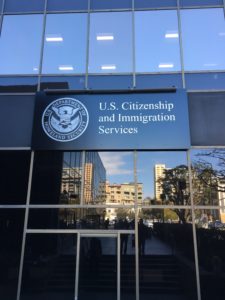
USCIS Field Office in California

A USCIS Field Office in California approved both our client’s Form I-751 petition to remove conditions on residence and Form N-400 application for naturalization in a single naturalization interview, held in early March 2019. With the conditions on his residence now removed, he is set to attend his naturalization oath ceremony and become a U.S. citizen.

Conditional Resident Awaiting I-751 Decision May Consider Filing For Naturalization

In many cases, conditional residents are eligible to file for naturalization before the conditions on their residence are removed and they get the regular, 10-year green card. Persons who are granted marriage-based permanent residence when the marriage to the U.S. citizen petitioner is less than two years old are issued a two-year, conditional green card. To get the conditions removed and maintain lawful permanent residence, the applicant and his spouse must file a joint I-751 petition before the two-year card expires, and no earlier than 90 days before the expiration. There are only three types of waivers (exceptions) to the joint filing requirement.

Continuous residence is one eligibility requirement for naturalization. You must reside continuously in the U.S. for at least 5 years as a permanent resident at the time you file your naturalization application. An exception is if you are a qualified spouse of a U.S. citizen, in which case your continuous residence must be at least 3 years at the time you file for naturalization. Continuous residence for naturalization purposes begins on the start date of your permanent residence, even if it is conditional.

As of June 2018, USCIS began issuing Receipt Notices for I-751 petitions that automatically extend the conditional resident status for 18 months past the expiration date of the two-year card. Previously, the extension was for 12 months, after which the person would need to obtain a temporary I-551 stamp (evidence of conditional residence) at a local USCIS office. The change was made to accommodate longer processing times for I-751s and to allow conditional residents to automatically keep their lawful status and maintain work and travel authorization in the interim.

Naturalization Interview Scheduled Before Conditions Removed

Our client’s naturalization interview was scheduled before he received a decision on the Form I-751 petition. At the naturalization interview, the USCIS officer exercised his authority to approve the I-751 even though it was still sitting at a USCIS Service Center awaiting adjudication. This cleared the way for the conditional resident to become a U.S. citizen.

Filing of Form I-751 Petition

Although both the Form N-400 and Form I-751 may be pending at the same time, the I-751 must be filed first in most cases. The two exceptions are if the conditional resident is filing for naturalization on the basis of qualifying military service or as the spouse of a U.S. citizen employed abroad, and thus may be naturalized without removal of conditions. In all other situations, such as our client’s, USCIS needs to first approve the I-751 petition before naturalization may be granted.

In December 2017, we filed a timely, joint Form I-751 petition with the USCIS California Service Center in Laguna Niguel, California. To demonstrate the conditional resident entered into and continued to have a good faith marriage with his U.S. citizen spouse, we submitted affidavits describing their relationship, shared car insurance policy, joint bank account and credit card account statements, and evidence of their home ownership.

The I-751 was initially transferred from the California Service Center to another USCIS Service Center. In June 2018, we received a Transfer Notice from the Service Center in Arlington, VA stating it was transferring the I-751 back to the California Service Center to speed up processing. Then in December 2018, we received a Transfer Notice from the California Service Center stating it completed a preliminary review of the petition and was transferring the case to the National Benefits Center in Lee’s Summit, MO for adjudication.

Filing of Form N-400 Application

The I-751 had been pending with USCIS for 10 months when the naturalization application was filed. Within three months of receiving the Form N-400, our client received his naturalization interview notice. It did not instruct him to have his U.S. citizen spouse accompany him or to bring evidence of their bona fide marriage. Nonetheless, I counseled him to do so, particularly because USCIS had yet to approve the I-751 petition and lift the conditions on his residence.

Attorney Appearance at Out-of-State Naturalization Interview

With our law firm based in Minneapolis, Minnesota, I flew out to California to attend the naturalization interview. My client could have retained local counsel to appear with him, but he insisted on having me there. (U.S. immigration is governed by federal laws, regulations and policies, which allow for representation at a USCIS Field Office by an out-of-state attorney.) 

The naturalization interview started off with his completing and passing the Civics Test and English Test. Then the USCIS officer went through his naturalization application, page by page. 

To prepare for the naturalization interview, my client and I had discussed potential questions about his marriage to the U.S. citizen petitioner, their relationship history, and his U.S. immigration record. Among his concerns was that he had been previously denied entry to the United States as a visitor by the U.S. Customs & Border Protection, after being employed in the country on a temporary worker visa for an extended period. I advised him on how to best respond truthfully to this issue, which did end up being raised by the USCIS officer at the interview.

Naturalization Expected

When the USCIS officer stated he would approve the N-400 application, I reminded him the I-751 petition was still pending. The officer was not aware of this because the file had not been flagged. He agreed to call in the U.S. citizen spouse, who had accompanied us to the Field Office and was seated in the waiting room.

Both the conditional resident and his spouse answered questions and presented documentary evidence on the bona fide nature of their marriage. At the end of the interview, the officer said he would also approve the I-751 petition. Even though he did not have the original I-751 filing,  and did not review the copy we had with us, he favorably adjudicated the petition based on the testimony and evidence presented.

A day after the interview, USCIS issued the Form I-797, Approval Notice for the I-751 petition. My client soon sent me an email stating, “When I checked online the status of the N-400 on USCIS website it now says they approved my application, and the next step is to wait for the Oath Ceremony invitation letter in the mail, so looking forward to this very much…Thanks again for all your help. You really made a difference in our lives.

We expect him to be scheduled for a naturalization oath ceremony and to become a U.S. citizen. This is a true success story. 

Cheers,

Dyan Williams

Founder & Principal Attorney
Dyan Williams Law PLLC
(612) 225-9900
info@dyanwilliamslaw.com

###

This article provides general information only. It is based on law, regulations and policy that are subject to change. Do not consider it as legal advice for any individual case or situation. Each case is different and case examples do not constitute a prediction or guarantee of success or failure in any other case. The sharing or receipt of this information does not create an attorney-client relationship.

SUBSCRIBE           CONTACT

Updated Notice to Appear (NTA) Guidance Requires USCIS to Initiate Removal Proceedings In More Cases

On June 28, 2018, USCIS issued updated guidance requiring its officers to initiate removal proceedings in more cases to align with President Trump’s executive order, Enhancing Public Safety in the Interior of the United States.  USCIS Director L. Francis Cissna said the new policy equips USCIS officers to better support the immigration enforcement priorities of the Department of Homeland Security (DHS).

The 2018 memorandum instructs USCIS to issue a Notice to Appear in removal proceedings before an Immigration Judge to inadmissible or deportable persons in an expanded range of situations, instead of referring NTAs to the U.S. Immigration & Customs Enforcement (ICE) in limited cases.  One major change is that an NTA must be issued whenever a person’s immigration benefit request is denied and he or she is “not lawfully present” in the United States.

What is a Notice to Appear?

A Notice to Appear is a Form I-862 the DHS issues to initiate removal proceedings against a person. The NTA includes the charges against the person and alleges the immigration laws he or she violated.  Some NTAs include the date and time of the initial hearing, when you first appear before an immigration judge who decides whether you should be removed or whether you qualify for relief, including voluntary departure in lieu of a removal order.

What Was the Previous USCIS Policy on Issuing a Notice to Appear? 

The November 7, 2011 Policy Memorandum (PM), which is now superseded by the June 28, 2018 PM, provided “USCIS guidelines for referring cases and issuing Notices to Appear (NTAs) in a manner that promotes the sound use of resources of the Department of Homeland Security and the Department of Justice to enhance national security, public safety, and the integrity of the immigration system. ”

The 2011 policy instructed USCIS to issue an NTA in the following situations:

  • Cases where it is required by statute or regulation, such as termination of Conditional Permanent Resident Status and denials of Form I-751, and asylum referrals.
  • Fraud or willful misrepresentation/section INA 212(a)(6)(C) cases when a Statement of Findings substantiating fraud is part of the record.
  • In naturalization (Form N-400 application) cases where the applicant is removable, including those who were inadmissible at the time of obtaining permanent residence.

The 2011 policy further directed USCIS to refer matters to ICE in the following situations:

  • Egregious Public Safety (EPS) cases “where information indicates the alien is under investigation for, has been arrested for (without disposition), or has been convicted of” certain specified aggravated felonies as defined under section 101(a)(43) of the INA; is a Human Rights Violator, is a known or suspected street gang member or is subject to Interpol  hits; or has re-entered the U.S. after removal subsequent to a felony conviction where no Form I-212, Application for Consent to Reapply for Admission, has been approved.
  • Cases where the person is inadmissible or removable due to a criminal offense falling outside of the EPS definition, after USCIS completes adjudication.

What is the Current USCIS Policy on Issuing a Notice to Appear?

The June 28, 2018 Policy Memorandum (PM) requires USCIS to issue a Notice to Appear in a broader range of cases without first consulting ICE.

Many more persons will be placed in removal proceedings as USCIS is now required to issue an NTA in the following situations:

  • If an application or petition for immigration benefits is denied and the person is not in lawful status (not lawfully present).
  • If an application or petition for immigration benefits is denied and the person is removable (i.e. subject to any removability grounds under INA 237), especially when there is evidence of fraud or misrepresentation and/or abuse of public  benefit programs.
  • Criminal cases in which the applicant is removable and has been convicted of or charged with any criminal offense, or has committed acts that are chargeable as a criminal offense, even if the criminal conduct was not the basis for the denial or is the ground of removability.
  • Naturalization cases in which the applicant is removable and USCIS denies a Form N-400, Application for Naturalization, on good moral character grounds due to a criminal offense.

USCIS will continue to apply the 2011 NTA guidance to the following:

  • Cases involving national security concerns.
  • Cases where issuing an NTA is required by statute or regulation.
  • Temporary Protected Status (TPS) cases, except where, after applying TPS regulatory provisions, a TPS denial or withdrawal results in an individual having no other lawful immigration status.
  • Deferred Action for Childhood Arrivals (DACA) recipients and applicants when USCIS is: (1) processing an initial or renewal DACA request or DACA-related benefit request; or (2) processing a DACA recipient for possible termination of DACA.

UPDATE: On September 27, USCIS announced it will begin implementing the new guidance on October 1 in certain cases. For instance, it may issue NTAs on denied status-impacting applications, including Form I-485, Application to Register Permanent Residence or Adjust Status, and Form I-539, Application to Extend/Change Nonimmigrant Status. The June 2018 NTA Policy Memo will not be implemented with respect to employment-based petitions and humanitarian applications and petitions at this time. 

In a September 27th teleconference, USCIS also said it will not issue an NTA immediately upon denial of an immigration benefit.  Normally, it will wait for the expiration of the motion or appeal period before issuing an NTA. If an NTA is issued before a motion or appeal is filed or while it is pending, and USCIS takes favorable action on the motion or appeal, USCIS will notify ICE. Withdrawing an application does not cancel USCIS’s authority to issue an NTA. 

Potential Negative Effects of the NTA Policy Change

The new NTA guidance might discourage eligible applicants from seeking immigration benefits out of fear of getting their requests denied and being placed in removal proceedings if they are not lawfully present.  This includes persons applying for a green card (lawful permanent resident status), a change or extension of status, a waiver of inadmissibility and other immigration relief.

Departing the United States on one’s own, after being denied an immigration benefit, will bring harsh penalties when an NTA is issued and the person fails to appear for the scheduled Immigration Court hearing. An in absentia removal order is issued if there is clear, unequivocal and convincing evidence that written notice was provided and that the person is removable, but did not attend the proceeding.

At the same time, those who wait in the United States for an initial court date to appear before an immigration judge will continue to accrue unlawful presence toward the 3/10-year bar to re-entry under INA 212(a)(9)(B).  A person who accrues unlawful presence of more than 180 days but less than one year is barred from re-entering the U.S. for three years. The bar to re-entry is 10 years if the person accrues unlawful presence of more than one year prior to departure. The initiation of removal proceedings does not stop the accrual of unlawful presence.

Furthermore, the updated policy turns USCIS into another immigration enforcement component of DHS, along with ICE and the U.S. Customs & Border Protection (CBP).  An increase in the issuance of NTAs will create additional backlog in the immigration court system and lengthen USCIS processing times.

Conclusion

Besides the new NTA policy, USCIS issued updated guidance to make it easier to deny a petition or application without first issuing a Request for Evidence or Notice of Intent to Deny. Another  USCIS policy change also subjects more nonimmigrant students and exchange visitors to accruing unlawful presence toward the 3/10-year bar, as well as the permanent bar under INA 212(a)(9)(C).

All these new policies are in line with the February 2018 change in USCIS’ mission statement, deleting sentences that refer to the United States as “a nation of immigrants” and to noncitizens who apply and pay for immigration benefits as “customers.” USCIS Director Cissna explained that this is “a reminder that we are always working for the American people.”

For more information, read our related articles:

Updated Policy Makes It Easier for USCIS to Deny Petitions and Applications Without First Issuing a Request for Evidence (RFE) or Notice of Intent to Deny (NOID)

USCIS Policy Change Makes Nonimmigrant Students and Exchange Visitors More Likely to Accrue Unlawful Presence Toward 3/10-Year Bar and Permanent Bar

###

This article provides general information only. It is based on law, regulations and policy that are subject to change. Do not consider it as legal advice for any individual case or situation. Each legal case is different and case examples do not constitute a prediction or guarantee of success or failure in any other case. The sharing or receipt of this information does not create an attorney-client relationship.

SUBSCRIBE           CONTACT

Photo by: qimono

5 Benefits of Having Immigration Counsel at Your In-Person Interview with USCIS

When you receive notice of your in-person interview with U.S. Citizenship & Immigration Services (USCIS), you might be tempted to attend it without counsel to save on legal fees.  Many applicants, however, end up spending more money down the line because they did not have a qualified attorney helping them deal with unexpected problems at the interview.

If you filed the application or petition on your own, you could tell yourself the wait is over and the interview is just a formality before USCIS grants the immigration benefit. If you had counsel helping you with the filing, you might decide her presence at the interview is excessive because your important questions have already been addressed.

But the advantages of having reputable, experienced counsel appear with you at the interview far outweigh the disadvantage of incurring legal fees for representation.

In-person interviews with USCIS are necessary to obtain most immigration benefits, including asylum, permanent residence (green card) and naturalization (U.S. citizenship). The interview usually occurs at the USCIS Field Office with jurisdiction over the applicant’s place of residence.

Here are 5 main benefits of having immigration counsel at your in-person interview with USCIS:

1. Provide protection against excessive screening or vetting

The in-person interview is a screening and vetting procedure for persons seeking immigration benefits to reside or stay long-term in the United States. While USCIS officers are trained to be professional, courteous, and respectful of your legal rights, some may turn (or may seem) hostile when there is reason to believe the applicant is committing immigration fraud, is a danger to the community, or is ineligible for or undeserving of the benefit sought.

Interviews with USCIS are not supposed to be adversarial in nature. They are meant to gather complete and accurate information (both favorable and unfavorable) to properly adjudicate the case, not to find a reason to deny the requested benefit.

Nevertheless, due to expansions in immigration enforcement priorities under the Trump Administration, there are more reports of certain applicants being arrested by U.S. Immigration & Customs Enforcement (ICE) at their interviews with USCIS.  (NOTE: These cases involve only beneficiaries attending interviews who have prior or outstanding removal orders and have remained unlawfully in the country. Therefore, they have no due process rights to be placed in removal proceedings because there is an already-existing removal order to be executed by the U.S. government.) 

Prior to the interview, the attorney can review your criminal record and immigration history to evaluate the risks of interview attendance. While attorneys have no authority to stop ICE from lawfully apprehending or detaining an applicant at the USCIS interview, they may ask critical questions to verify where the applicant will be held and the next steps in the detention and removal process. Unless there is an express agreement, however, the attorney is not obligated to represent you beyond the interview with USCIS.

In less complicated cases — such as where ICE apprehension or detention is unlikely because the only violation is a visa overstay — your having counsel at the interview is still crucial. Attorney appearance encourages the USCIS officer to remain professional and courteous and stick to relevant issues.

2. Clarify unclear questions and complex issues

At the in-person interview, the USCIS officer may ask for any information related to questions on the application forms, your eligibility for the benefit sought, your marital history, your manner of entry into the U.S., your admissibility to the U.S. (such as any arrests, charges or convictions, or misrepresentations made to an immigration official), your educational background, and your past and present employment (including the documents you used to obtain a job in the United States).

When a USCIS officer asks a vague or unclear question, the attorney may request clarification to ensure the applicant understands what is being asked. If the attorney knows the answer is factually or legally incorrect, she may also ask the officer to rephrase the question or point to objective records in the file to show the applicant is mistaken.

3. Help prevent unnecessary delays and complications

USCIS stated the new interview requirement, which became effective on October 2, 2017,  will amount to approximately 17% of the agency’s total workload. Thus, longer processing times and increased delays in all adjudications, especially interview-based applications, are expected.  These days, USCIS is taking one year or more to adjudicate green card and naturalization applications, as opposed to six to nine months in the past.

At the interview, you should strive to present all the necessary information and requested documents to facilitate approval. Otherwise, it may take several weeks or months for USCIS to issue a Request for Evidence or Notice of Intent to Deny, to which you must respond within a specified time frame (e.g. 87 days and 30 days, respectively.)

Your attorney can help you figure out what you need to bring to the interview, based on the instructions in the interview notice and the unique facts of your case. The attorney is also better equipped to evaluate whether a favorable decision or adverse notice is expected, depending on what occurred at the interview, and prepare you for next steps following the interview.

4. Serve as an advocate

Unlike in court hearings before a judge, interviews with USCIS do not involve your attorney asking you direct questions to solicit testimony. The USCIS officer asks the questions and  you provide the answers.

Questions on issues that may seem inappropriate or unimportant to you might be relevant to your eligibility for the immigration benefit and be in line with USCIS policy. Having counsel at the interview helps you determine when it’s better to answer, ask for clarification, or object (for good cause).

Your attorney cannot respond to questions the USCIS officer directs to you. She also may not coach you on how to lie about facts or hide information that is requested. But she may advise you on legal issues or raise objections to inappropriate questions or, as a last resort, ask to speak with a supervisor (particularly if the interview becomes argumentative or antagonistic).

Having an attorney present at the interview helps to protect and advocate your legal rights. If USCIS instructs you to provide a sworn, written statement on controversial points, the attorney can verify that you understand what you are providing and signing.

Counsel can further help you avoid misrepresenting material facts to the USCIS officer and explain unfavorable information to defuse a difficult situation. They advise you on pitfalls and weaknesses in your case that will likely be at issue in the interview. They determine when and how to best present testimony and documentary evidence to highlight positive factors and offset negative factors in your case.

It is rare for interviews to be video-recorded. Without counsel, it will just be the USCIS officer and you (and possibly your interpreter) in the interview room. The officer will take notes for the file, but you typically will not have access to them unless you submit a Freedom of Information/Privacy Act Request, which normally takes several months to process. Moreover, in the FOIA response, the agency may redact, or black out, any information protected by one of the nine FOIA exemptions to prevent certain harms, such as an invasion of privacy, or harm to law enforcement investigations.

An attentive attorney at the interview will carefully observe the discussion and take informative notes on questions asked and answers given. If USCIS issues a Notice of Intent to Deny or other adverse notice based on purported discrepancies and inconsistencies at the interview, an attorney may provide a credible explanation on what was said in the interview and how it was conducted. It won’t just be your word against the allegations of the interviewing officer.

5. Add credibility to your claim

Having an attorney present does not mean you have something to hide. On the contrary, many USCIS officers prefer applicants to bring counsel to the interview for it to run more smoothly and effectively.

In addition, because attorneys have a duty of candor to the tribunal, their presence generally adds credibility to your claims.  An attorney cannot knowingly present false information or false documents or perpetuate fraudulent claims without running afoul of the professional responsibility rules.

The attorney can help prepare you for interview by describing what questions to expect and which issues are likely to arise, and how to best address them. They can further prepare and submit a legal memorandum to stave off concerns and persuade the officer to approve your case.

Conclusion: Bring Counsel to the Interview

There are many applicants who attend their interviews without counsel and get their applications or petitions approved. But these cases are usually very well-documented with positive information and no adverse factors to consider. The applicant also has to be very fortunate having a relatively short interview where no problems arose. It is hard to know how exactly your interview will go.

Many things can go wrong at the interview with USCIS, which may lead to severe consequences including denial decisions and even a Notice to Appear in removal proceedings before an Immigration Court. This can occur under statutory law, regardless of the U.S. immigration policies of any existing Administration.

For example, the USCIS officer may conduct separate interviews of the U.S. citizen (I-130 petitioner) and his foreign national spouse (I-485 applicant) and determine they entered into a sham marriage for immigration purposes. The officer may review the entire immigration history and/or criminal record of a naturalization applicant and find that he is not only ineligible for citizenship, but is subject to removal from the United States.

Even if you prepared and filed the application or petition with USCIS on your own, or with the help of an immigration consultant or online immigration service, you may have counsel enter her appearance at the interview by submitting a Form G-28, Notice of Entry of Appearance as Attorney, to the USCIS officer.  Once the G-28 is accepted, the appearance will be recognized until the matter is concluded (absent a withdrawal of representation).

It’s best to secure counsel for the interview at least two weeks in advance to avoid scheduling conflicts and lack of preparation.

In some cases, the interview goes so well that having counsel seems to be an added expense with no benefit. But more than likely, counsel’s presence at the interview contributes to the successful outcome, even though you might not be able to measure the effects. And when the stakes are high, it’s better to be over-prepared than under-prepared and to err on the side of caution by having counsel at the interview.

###

This article provides general information only. It is based on law, regulations and policy that are subject to change. Do not consider it as legal advice for any individual case or situation. Each legal case is different and case examples do not constitute a prediction or guarantee of success or failure in any other case. The sharing or receipt of this information does not create an attorney-client relationship.

SUBSCRIBE           CONTACT

Photo by: johnhain

Trump Administration ends DACA: no new applications accepted as of September 5, 2017; renewal applications accepted up to October 5, 2017

On September 5, 2017, the Trump Administration announced the ending of Deferred Action for Childhood Arrivals (DACA) program – a temporary immigration relief that was introduced by the Obama Administration on June 15, 2012. In the Memorandum on Rescission of Deferred Action for Childhood Arrivals (DACA) from DHS Acting Secretary Elaine Duke, and related FAQs, the Administration set forth the following steps to end the program:

Initial DACA (Form I-821D) applications and related applications for Employment Authorization Document (Form I-765): U.S. Citizenship & Immigration Services (USCIS) will adjudicate, on a case-by-case basis, properly filed initial DACA requests and associated applications for work authorization that were received by September 5, 2017. All initial DACA requests received after September 5 will be rejected.

DACA Renewal (Form I-821D) applications and related applications for Employment Authorization Document (Form I-765): USCIS will adjudicate, on a case-by-case basis, properly filed renewal DACA requests and associated applications for work authorization, from current DACA holders, that were received by September 5, 2017.

USCIS will also accept and adjudicate DACA renewal requests from current DACA holders whose benefits will expire on or before March 5, 2018, as long as they are received by October 5, 2017.

USCIS will reject all DACA renewal requests that do not fit this criteria, including all applications received after October 5, 2017.

Applications for Advance Parole (Travel Document) Based on DACA Grants: As of September 5, USCIS will not approve any new DACA-based applications for Advance Parole/travel document (Forms I-131). USCIS will administratively close all pending applications for advance parole and refund the filing fees.

The Department of Homeland Security (DHS) will generally honor the validity period for previously approved applications for Advance Parole, but the U.S. Customs & Border Protection (CBP) retains the authority to determine whether to admit persons who present themselves at a U.S. port of entry, as a matter of discretion. USCIS also retains authority to revoke or terminate an advance parole document at any time.

Why is the DACA program ending?

The DACA program was implemented by a June 15, 2012 memorandum from then DHS-Secretary Janet Napolitano, titled Exercising Prosecutorial Discretion With Respect to Individuals Who Came to the United States as Children.

The Obama Administration planned to expand the DACA program in February 2015 and introduce the Deferred Action for Parents of Americans and Lawful Permanent Residents (DAPA) program in May 2015. These plans, however, were halted after a Texas-led coalition of 26 states filed a lawsuit in the U.S. District Court for the Southern District of Texas to stop the rollout.

On February 16, 2015, U.S. District Court Judge Andrew Hanen in Texas issued a temporary injunction blocking the implementation of the expanded DACA and the new DAPA.  On June 23, 2016, the U.S. Supreme Court issued a 4-4 opinion in United States v. Texas that allowed the  temporary injunction to stand.

In a June 29, 2017 letter to Attorney General Jeff Sessions, Texas and nine other states requested that DACA be phased out and DHS rescind the June 15, 2012 memorandum and not renew or issue any new DACA permits. They stated that if the Trump Administration agrees to rescind the June 15, 2012 DACA memorandum, they will voluntarily dismiss their lawsuit pending in the Southern District of Texas; otherwise, the complaint will be amended to challenge the existing DACA program.

During his election campaign, President Trump promised to end DACA. After Trump took office on January 20, then-Secretary of Homeland Security John Kelly rescinded the DAPA policy in June 2017. USCIS, however, continued to approve both initial and renewal DACA applications.

In its decision to end the DACA program, the Trump Administration considered the federal court rulings in ongoing litigation and the September 4, 2017 letter from the Attorney General to the DHS Acting Secretary, noting that DACA was an “unconstitutional exercise of authority by the Executive Branch” and calling for a wind-down process.

Who is affected?

Almost 800,000 persons have received DACA since the program began in June 2012. DACA holders include undocumented immigrants who came to the U.S. as minors before age 16, lived in the U.S. since June 15, 2007, are currently in school or have graduated from high school, have no serious criminal history, and meet other eligibility requirements.

How does the ending of the DACA program affect DACA holders? 

Employment Authorization 

DACA holders with a currently valid Employment Authorization Document (EAD) may continue to work lawfully in the United States. DHS does not plan to terminate or revoke any previous grants of DACA or work permits solely due to the ending of the program.

Advance Parole/Travel Authorization

DACA holders with a valid Advance Parole document, who are outside the United States, should be able to reenter the country. But Advance Parole has never guaranteed admission to the United States by the CBP, which maintains authority to decide whether to grant entry or deny it. The DHS may also revoke or terminate a grant of Advance Parole at any time, including when the DACA holder is outside the United States, which would prevent reentry to the country.

Immigration Enforcement

In the FAQs related to the September 5, 2017 memorandum ending DACA, the Trump Administration stated ,“[i]nformation provided to USCIS in DACA
requests will not be proactively provided to ICE and CBP for the purpose of immigration enforcement proceedings, unless the requestor meets the criteria for the issuance of a Notice To Appear or a referral to ICE under the criteria set forth in USCIS’ Notice to Appear guidance.

Explore Other Options

The DACA program provides authorized stay, work authorization, and temporary protection from removal (deportation), but no lawful nonimmigrant status or path to permanent residence. DACA recipients ought to be exploring other options to legalize their status, preferably before the program ends.

For example, if you are a DACA holder who is married to a U.S. citizen, your spouse may file an I-130 immigrant petition for you, and you may seek to obtain an immigrant visa at the U.S. Consulate or adjustment to permanent resident status within the United States in the immediate relatives category.

Adjusting to permanent resident status requires lawful admission to the United States. If you entered the country unlawfully, without presenting yourself for inspection, you normally must depart the country to apply for the immigrant visa overseas. Departure from the United States (without Advance Parole) triggers the 3/10 year unlawful presence bar.

Section 212(a)(9)(B)(i)(I) of the Immigration & Nationality Act (INA) states the 3 year bar to re-entry applies if you were unlawfully present in the U.S. for more than 180 days, but less than one year, and then depart the U.S. prior to commencement of removal proceedings. The U.S. government adds up all the days you were unlawfully present in the U.S. in a single ongoing period or stay (i.e. continuous period of unlawful presence).

The 3-year bar does not apply if you depart the U.S. after the Notice to Appear in removal proceedings is filed with the immigration court, following service of the NTA on you. But leaving the U.S. while you are in removal proceedings or being issued a removal order carries other immigration consequences.

Section 212(a)(9)(B)(i)(II) of the INA states the 10 year bar to re-entry applies if you were unlawfully present in the U.S. for one year or more, and then depart the U.S. The U.S. government adds up all the days you were unlawfully present in the U.S., even if they were from different periods or stays (i.e. the aggregate period of unlawful presence).

You begin to accrue unlawful presence only after April 1, 1997 and once you turn age 18.

The 3/10 year bar to re-entry is triggered only if you leave the U.S. This does not mean you should never leave the U.S. to legalize your immigration status, but you should know there are risks to your departure. (Illegally re-entering or attempting to illegally re-enter the U.S. further complicates your case and triggers a permanent bar under certain circumstances.)

A person who is inadmissible due to the 3 year/10 year bar may not receive an immigrant visa before the 3 year/10 year bar expires without first obtaining an I-601 waiver or I-601A waiver under section 212(a)(9)(B)(v) of the Immigration & Nationality Act.  To be eligible for the waiver, you must have a qualifying relative (U.S. citizen or permanent resident spouse or parent) who will suffer “extreme hardship” if you are not granted the immigrant visa and admitted to the United States.

Consult an Immigration Attorney

The American Immigration Council issued a September 5, 2017 Practice Advisory describing other possible forms of relief, such as adjustment of status, U and T visas, asylum, and special immigrant juvenile status.

DACA holders must consult an experienced immigration attorney to discuss whether they are eligible for other immigration options that are more lasting than DACA and could lead to permanent resident status.

This article provides general information only. It is based on law, regulations and policy that are subject to change. Do not consider it as legal advice for any individual case or situation. Each legal case is different and case examples do not constitute a prediction or guarantee of success or failure in any other case. The sharing or receipt of this information does not create an attorney-client relationship.

SUBSCRIBE           CONTACT

# # #

 Photo by: Antony Theobald

What Triggers a Notice of Intent to Revoke an I-130 or I-129F Petition and What Can You Do About It?

popped balloonWhen USCIS finds that it approved an I-130 (immigrant visa) or I-129F (K-1 visa) petition in error, it will issue a Notice of Intent to Revoke (NOIR) to the petitioner. A NOIR is a letter to the petitioner fully explaining why USCIS intends to revoke a previously approved petition. Typically, the petitioner has 30 days to respond to the allegations and present additional information or evidence before USCIS decides whether to revoke or reaffirm the petition approval.

What Factors Usually Trigger a Notice of Intent to Revoke? 

In marriage-based green card cases, the two most common factors that trigger a revocation notice are:

USCIS Discovers Prior Marriage Fraud Determination

A common reason for a NOIR is when USCIS overlooked a prior marriage fraud determination that prevents the approval of a subsequent petition for the same beneficiary.

Section 204(c) of the Immigration & Nationality Act states that no visa petition may be approved if the beneficiary was previously accorded, or sought to be accorded, an immediate relative or preference status as the spouse of a U.S. citizen or permanent resident, by reason of a marriage determined by USCIS to have been entered into for evading immigration laws (i.e. a sham marriage for immigration benefits).

It is not enough for the Consulate to have denied a prior immigrant visa or K-1 visa based on suspicion of a sham relationship. Rather, for section 204(c) to apply, USCIS must make an independent conclusion that the prior marriage was fraudulent.

If USCIS later discovers it should have denied the petition under section 204(c), due to an official determination of prior marriage fraud, it may issue a NOIR.

U.S Consulate Finds Lack of Evidence Showing Bona Fide Relationship or Marriage

Although the U.S. Consulate has no authority to revoke a petition, it has the final say in whether to grant you an immigrant visa or K-1 visa to enter the United States. The doctrine of consular nonreviewability severely limits judicial or administrative review of a consular officer’s visa denial.

Furthermore, a consular officer who has doubts about the bona fide nature of the relationship between the petitioner and visa applicant, or observes material discrepancies in the record, may return the petition to USCIS for possible revocation.

At the immigrant visa or K-1 visa interview, the consular officer may question the visa applicant and conduct its own investigation. It may also require additional documentary evidence of the relationship, even though USCIS has already approved the petition.

If you do not communicate well, submit insufficient documents, or provide answers that cause the Consulate to doubt the bona fide nature of your relationship to the petitioner, this could lead to a NOIR citing lack of evidence to keep the petition approval. If you raise issues that conflict with the existing record, this could lead to a NOIR citing fraud or willful misrepresentation to gain immigration benefits.

Because the Consulate has no authority to re-adjudicate the petition, it must support the return of the petition with factual and concrete reasons that USCIS did not fully consider.

The Consulate should seek revocation only if the consular officer knows, or has reason to believe, that the petition approval was obtained through fraud, misrepresentation or other unlawful means, or that the visa applicant is not entitled to the benefits sought in the petition.  Generally, Consulates are instructed to not return the petition unless it discovers new information or evidence not known to USCIS at the time of approval.

What Can You Do to Avoid or Overcome a Notice of Intent to Revoke? 

In marriage-based green card cases, the documentary evidence and testimony you present is essential to getting and keeping a petition approval. You cannot obtain an immigrant visa, a K-1 visa, or adjustment to permanent resident status without an underlying petition approval.

Avoiding a Notice of Intent to Revoke starts with filing a strong petition with USCIS and preparing thoroughly for the visa interview at the U.S. Consulate. Overcoming a Notice of Intent to Revoke lies in submitting a timely and convincing response to USCIS.

The key stages to exercise caution and seek sound advice from an experienced immigration attorney are:

Filing the Petition

USCIS approves an I-130 for a spouse and an I-129F for a fiancé(e) only when it is convinced the couple more likely than not shares a bona fide relationship, i.e. a marriage or engagement based on mutual intent to establish a life together, and not just for immigration benefits.

In support of the petition, the couple may present documentary evidence such as email correspondences, telephone records, stamped passport pages, travel itineraries, hotel receipts, photos of the two of them together, and affidavits from relatives and friends demonstrating they have a bona fide relationship.

When reviewing a stand-alone I-130 or I-129F petition, USCIS does not interview the petitioner or beneficiary, or conduct independent investigation, but generally relies on the documentary evidence submitted with the petition.

USCIS will issue a Request for Evidence (RFE) if initial evidence is missing. USCIS will issue a Notice of Intent to Deny (NOID) if initial evidence is mostly present, but: (a) the filing does not appear to establish eligibility by the preponderance of the evidence; (b) the case appears to be ineligible for approval but not necessarily incurable; or (c) the adjudicator intends to rely for denial on evidence not submitted by the petitioner.

Even when USCIS approves the petition, it may later issue a Notice of Intent to Revoke at any time before the immigrant visa or adjustment of status is granted. If the petition did not contain much evidence of a bona fide relationship or eligibility for the benefit sought, it’s a lot easier for USCIS to revoke the petition approval.

Obtaining guidance from an attorney on the appropriate forms and supporting evidence to submit is essential to getting a petition approval and avoiding a NOIR.

Attending the Visa Interview

In many cases, revocation proceedings are initiated by consular officers who suspect the couple do not share a real relationship. Consular officers often rely on their opinions about the nature of a genuine relationship, in light of cultural norms, local customs, and other factors.  In turn, USCIS may depend on the findings of a consular officer who has interviewed the visa applicant, verified documentary evidence, and performed investigation abroad.

Do not take the petition approval for granted or treat the visa interview as just a formality. The doctrine of consular nonreviewability severely limits administrative or judicial review of consular decisions. The visa applicant (beneficiary of the petition) must prepare fully for the visa interview, respond consistently, truthfully and appropriately to questions, and provide any requested or missing documents.

Having counsel prepare you for the visa interview, including questions and concerns that are likely to be raised by the consular officer, is critical.

Responding to a NOIR

Even couples who share a bona fide relationship can end up with a Notice of Intent to Revoke. If USCIS issues a NOIR, it means it found good and sufficient cause to revoke the petition approval. When responding to a NOIR, it’s important to rebut each and every issue raised, including allegations against the bona fide nature of the relationship.

USCIS must provide derogatory information unknown to the petitioner or applicant in the NOIR. The petitioner typically has 30 days to respond to the allegations and present additional information or evidence before USCIS makes a decision.

Due to the time constraints, multiple issues raised in the NOIR, and the petitioner’s lack of experience with complicated immigration matters, it’s important to get counsel’s help. An experienced attorney can advise you on the rebuttal documents and information to submit, prepare a persuasive legal brief, and submit the best possible response within 30 days.

Challenging a Revocation Notice

If USCIS agrees to sustain the petition approval – following review of the response to the NOIR –  it will issue a reaffirmation notice to the petitioner. After receiving the reaffirmation notice, the Consulate may accept the petition as valid, schedule a second interview, and issue the immigrant visa or K-1 visa.

If, however, USCIS decides the petition should not have been approved, it will issue a revocation notice to the petitioner. The petitioner may appeal an I-130 or I-129F revocation to the higher agency, or file a motion to reopen or reconsider with USCIS, within 15 days. If the petitioner does not challenge the revocation, the decision becomes final and the petition may no longer be used to continue the immigration process.

When the couple is already married, the petitioner may file a new I-130 petition, but must include evidence to rebut any claims that led to the NOIR or revocation notice in a prior petition. When the couple is engaged, filing a new K-1 fiancé(e) petition is not a cure-all solution because USCIS and the Consulate will be aware of problems in the prior petition. Getting married and filing an I-130 petition is a more effective, but not foolproof, course of action.

A petitioner who files a new I-130 or I-129F petition still has to overcome issues listed in a Notice of Intent to Revoke a prior petition approval, or address concerns raised by the U.S. Consulate.

If you receive a revocation notice, consult an immigration attorney to determine whether to file an appeal, a motion to reopen or reconsider, and/or a new petition, and help you pursue your options.

To learn more about the revocation process, read our other article, Notice of Intent to Revoke I-130 or I-129F Petition: Big Stumbling Block to Overcome in Marriage-Based Green Card Case.

This article provides general information only. It is based on law, regulations and policy that are subject to change. Do not consider it as legal advice for any individual case or situation. Each legal case is different and case examples do not constitute a prediction or guarantee of success or failure in any other case. The sharing or receipt of this information does not create an attorney-client relationship.

SUBSCRIBE           CONTACT

# # #

Photo by: Quinn Dombrowski