Category Archives: green card

Changes to the Visa Bulletin: Understanding the Two Filing Charts

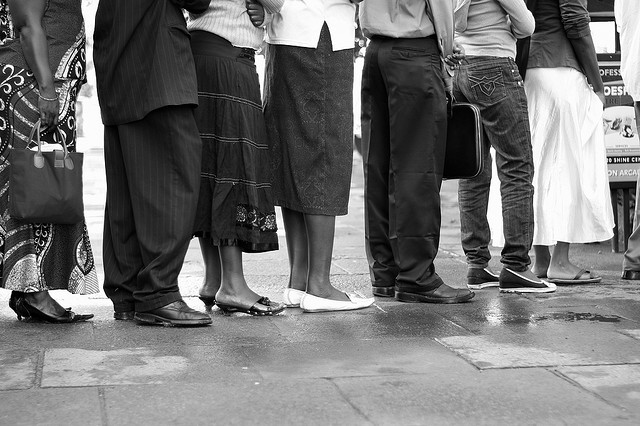
queue

On October 1, 2015, the U.S. Department of State made changes to the monthly Visa Bulletin so there are now two different dates to track: the Application Final Action Dates (AFAD) and the Dates for Filing Applications (DFA).  The Bulletin revisions are meant to improve the backlog in the family-sponsored preference and employment-sponsored preference categories, where the demand for immigrant visas can – and often do – exceed the supply each year. In some categories, the wait for a visa to become available is as long as 5 to 10+ years.

Advantages with the New System

The priority date marks the applicant’s place in the visa queue. In the family-based categories, the priority date is the date USCIS received the Form I-130, Petition for Alien Relative or in certain cases, the Form I-360, Petition for Amerasian, Widow(er) or Special Immigrant.

In employment-based categories, it’s the date the U.S. Department of Labor (DOL) received the application for alien labor certification or the date USCIS received the Form I-140, Immigrant Petition for Alien Worker (if no alien labor certification is required). In certain cases, it’s the date USCIS received the Form I-360 petition (EB-4, fourth preference category) or the Form I-526, Immigrant Petition by Alien Entrepreneur (EB-5, fifth preference category).

The AFAD chart is consistent with previous Visa Bulletins under the old system. AFADs are the cut-off dates that determine when an immigrant visa becomes available to Form DS-260, Immigrant Visa applicants or Form I-485, Adjustment of Status applicants, depending on their priority date, preference category, and country of chargeability.

The DFA chart is part of the new system and was first introduced in the October 2015 Visa Bulletin. DFAs are the cut-off dates that determine when Immigrant Visa applicants – depending on their priority date, preference and category – should receive notice from the DOS’ National Visa Center (NVC) instructing them to submit their documents for consular processing.

Each month, U.S. Citizenship & Immigration Services (USCIS) also determines whether eligible applicants in the U.S. may use the DFA chart, instead of the AFAD chart, for filing their I-485 applications. Current information is posted on the USCIS website at www.uscis.gov/visabulletininfo. When USCIS finds there are more immigrant visas available for the fiscal year than there are known applicants for such visas, USCIS will state on its website that I-485 applicants may use the DFA chart in the Visa Bulletin.

In most cases, the DFAs are later than the AFADs. Example: In the December 2015 Visa Bulletin, the DFA for the family-sponsored, second preference, F2A category is March 1, 2015 (“01MAR15”). Meanwhile, the AFAD for this same category is June 15, 2014 (“15JUN14”). If the applicant’s priority date is April 30, 2015, or otherwise earlier than the DFA, he may file the I-485 with USCIS in December 2015, even though an immigrant visa is not yet available. Under the old system, the applicant’s priority date must have been June 14, 2014, or otherwise earlier than the AFAD, before he could file the I-485 in December.

In most cases, the new system allows Immigrant Visa applicants and sometimes Adjustment of Status applicants to get a head start on filing for permanent residence.

Even if the priority date is not current in the AFAD chart, an Immigrant Visa applicant may use the DFA chart to submit required forms and documents following receipt of instructions from the NVC.

If USCIS determines the DFA chart may be used in a particular month, it will accept I-485 adjustment applications when the applicant’s priority date is earlier than the cut-off date in the DFA chart. I-485 applicants may also file for and receive an employment authorization document (EAD) and advance parole (travel document).

Those who are stuck in the employment-based backlog have greater job mobility with an EAD that is based on a pending I-485. In particular, once an employment-based I-485 application is pending 180 days or more, “portability” rights generally allow the individual to change employers, as long as the new job is in the same or a similar occupation.

Limitations of the New System

Unless otherwise stated on the USCIS website, individuals seeking green cards within the U.S. must normally use the AFAD chart for determining when they may file their I-485 applications. When USCIS finds there are fewer immigrant visas available for the fiscal year than there are known applicants for such visas, I-485 applicants must use the AFAD chart, instead of the DFA chart, to file their applications.

All applicants still have to wait for the AFAD to become current before the green card or immigrant visa can be issued.

USCIS will not adjudicate or approve the I-485 until the priority date becomes current or is earlier than the cut-off date in the AFAD chart. Even if the applicant filed early under the DFA chart, it could be another year or so before he receives an I-485 decision or green card. A final decision on Immigrant Visa applications also cannot be taken until the AFAD becomes current.

When applicants file their I-485 or Immigrant Visa application early under the DFA chart, material changes may occur while they are waiting for the AFAD to become current. They might get arrested, charged and convicted of a crime that affects their eligibility for a green card. Waivers are available for only certain criminal-related grounds of inadmissibility in only some cases.

Furthermore, failure to report material changes in one’s case to USCIS or the U.S. Consulate may be construed as fraud or willful misrepresentation to gain immigration benefits. This is a lifetime bar to obtaining permanent residence. Fraud/misrepresentation waivers are available only to applicants with a U.S. citizen or permanent resident spouse or parent who would suffer extreme hardship if the applicant was not admitted to the U.S.

Generally, all I-485 applicants must submit a Form I-693, Report of Medical Examination and Vaccination Record, completed by a designated U.S. civil surgeon.

If the Form I-693 is filed with the I-485 under the DFA chart, it may expire by the time the AFAD is current and USCIS can issue a final decision on the I-485. To avoid re-doing the immigration medical examination, I-485 applicants might want to wait until receiving a Request for Evidence (RFE) or until the I-485 interview to submit the Form I 693.

The revised procedures in the Visa Bulletin does not change eligibility requirements for I-485 and Immigrant Visa applicants. For example, individuals must still be in lawful nonimmigrant status (e.g. H-1B or F-1) when they file an I-485 application in the family-sponsored or employment-based category. Those who are out of status in the U.S. normally do not qualify for adjustment of status. Instead, they must depart the U.S. to apply for an immigrant visa.

If they depart the U.S. after accruing more than 180 days to less than 1 year of unlawful presence, they trigger a 3-year bar to re-entry. The bar is 10 years if the unlawful presence lasted 1 year or more. To be excused from the 3/10 year bar so they may obtain an immigrant visa before the 3/10 years pass, they must apply for and receive an I-601 waiver. Getting the waiver requires them to show a U.S. citizen or permanent resident spouse or parent will suffer extreme hardship if they are not admitted to the U.S.

A pending I-485 generally provides “authorized stay” even if the person falls out status – as long as the I-485 is non-frivolous and was timely and properly filed with USCIS. But when possible, it is best to maintain or extend lawful nonimmigrant status (e.g. H-1B or L-1) until USCIS approves the I-485. Failure to maintain status leaves the person with no safety net if USCIS later decides to deny the I-485 or revoke the approval of the underlying visa petition.

The Visa Bulletin Matters to Green Card Applicants in the Family-Sponsored and Employment-Based Preference Categories, But Not to Immediate Relatives of U.S. Citizens 

The Immigration and Nationality Act (INA) limits the number of immigrant visas that may be issued, each year, to foreign nationals seeking to become lawful permanent residents in the family-sponsored and employment-based preference categories. Visas in these preference categories are not always available.

When demand exceeds supply of visas for a given year in a given category or country, a visa queue (backlog) forms. The DOS distributes the visas based on the applicant’s priority date, preference category, and country of chargeability.

When the priority date is earlier than the cut-off date in the AFAD chart, or the AFAD is “current” (“C”) for the preference category and country of chargeabilty, prospective immigrants can receive a final decision on their I-485 or immigrant visa applications.

If the Visa Bulletin shows “U” in a category, immigrant visas are temporarily unavailable to all applicants in that preference category and/or country of chargeability.

Immigrant visas for “immediate relatives” of U.S. citizens, however, are unlimited. An immigrant visa is always available to:

  • Spouses of U.S. citizens
  • Unmarried, minor children (under age 21) of U.S. citizens
  • Parents of adult U.S. citizens (age 21 or older)
  • Widows or widowers of U.S. citizens if the U.S. citizen filed a Form I-130 immigrant petition before his or her death or if the widow(er) files a Form I-360, self-petition within 2 years of the citizen’s death

When Possible, It’s Better to File When the DFA Is Current, Instead of Wait for the AFAD to Become Current

You don’t have to file your I-485 or Immigrant Visa application when the DFA is current. But there are several advantages to getting an early start. Filing under the DFA chart helps to ensure cases are ready to be approved when the AFAD becomes current.

Like AFADs, DFAs can roll back instead of move forward. Still, filing early provides some protection against visa retrogression. This is when a priority date that is current one month will not be current the next month, or the cut-off date will move backwards to an earlier date. Visa retrogression occurs when the visas have been used up or is expected to run out soon in the fiscal year. A new supply of visa numbers become available at the start of the fiscal year, October 1, but the priority dates might still take a while to return to where they were before retrogression.

While the new system does not involve any substantive changes in immigration law, it includes procedural changes that help to ease the backlog and provide some advantages to prospective immigrants.

###

This article provides general information only. It is based on law, regulations and policy that are subject to change. Do not consider it as legal advice for any individual case or situation. Each legal case is different and case examples do not constitute a prediction or guarantee of success or failure in any other case. The sharing or receipt of this information does not create an attorney-client relationship.

SUBSCRIBE           CONTACT

Photo by: Xiaojun Deng

I-212 Waiver + Diversity Immigrant Visa = A True Success Story

confetti

On October 20, 2015, Dyan Williams Law PLLC celebrated its first-year anniversary and I celebrated the end of my first year as a solo practitioner. It’s been a wonderful journey. Although the prior 10+ years I spent at other law firms were rewarding, my 1 year at Dyan Williams Law proved to be much more. I  enjoy every single day of operating my own law firm, doing phenomenal work, and serving an excellent group of clients.

Our first year came to a close with most of our immigration cases approved and none denied. Others are in the works or are pending with the immigration agencies. One true success story involved USCIS’ expedited approval of a Form I-212 waiver request for a very deserving client.

Our client – an Immigrant Visa applicant – was unable to obtain his 2015 Diversity Visa without an I-212 waiver granting him permission to re-enter the U.S. following an expedited removal order. During the month of May, the U.S. Consulate granted the diversity visas to his wife (principal DV applicant) and young child (derivative DV applicant), but instructed him to first obtain an I-212 waiver.  He was unaware that he needed the waiver until the U.S. Consulate informed him.

Two years ago, he presented his visitor’s visa at an international airport to gain entry into the U.S. Instead of admitting him, the U.S. Customs & Border Protection placed him in secondary inspection and questioned him about his prior visits. After he admitted to previously working in the U.S. without proper authorization, he was summarily removed from the U.S. and sent back immediately to his home country.  His visitor visa was revoked and he was barred from re-entering the U.S. for five years, up until 2018.

The cut-off date to receive the 2015 Diversity Visa was September 30, the end of the DV Lottery fiscal year. Because he had only four months to obtain the visa when he contacted me in May about his I-212 application, I had to prepare a strong waiver request that would be readily and expeditiously approved by USCIS. The normal processing time for I-212 applications is 6 to 12 months.

I first had to review the Notice of Expedited Removal Order to determine why exactly he needed the waiver. Fortunately, he was not charged with fraud or willful misrepresentation to gain entry into the U.S. Had this been the case, he would have needed a separate I-601 waiver, for which he was not eligible.

In particular, for I-601 purposes, he did not have a qualifying relative (U.S. citizen spouse or parent who would suffer extreme hardship if he were not admitted to the U.S.) Although his wife received her Diversity Visa, she first had to land in the U.S. and be admitted to the country to become a permanent resident. And he had to accompany her to the United States on his Diversity Visa at the same time to become a permanent resident.

I next had to learn about all the relevant details, including the unusual hardships he and his family would suffer if he were not admitted to the U.S., his work experience and professional qualifications, and the harsh conditions in his home country. I further counseled him on the documentary evidence he should provide to support his waiver request. I also researched and gathered additional reports and articles on the terrible conditions in his home country.

It took him about one month to collect and provide all the required information and documents needed for the I-212 waiver. On June 24, I filed the I-212 application with the USCIS Field Office in Boston, MA, which had jurisdiction to decide the case. That office, however, (mistakenly) transferred the application to the Nebraska Service Center (NSC), where the I-212 sat for about two months for “administrative processing.” This unnecessary transfer added to the processing time. On August 20, NSC sent the case back to the Boston Field Office for a decision.

To support the I-212 waiver application, I presented a thorough legal brief describing how the positive factors outweighed the negative factors, and why my client deserved the waiver as a matter of discretion, under the law. I also provided compelling reasons for expedited processing (i.e. adjudication of the I-212 waiver application within 3 months). I argued that an emergency situation, humanitarian reasons, and subsequently, USCIS error and/or compelling interest of USCIS, existed to satisfy the criteria for an expedited decision.

After I submitted multiple follow-up letters to USCIS (including the Boston Field Office and NSC) describing the urgency of the situation, the USCIS adjudications officer in Boston made a personal telephone call to me on September 23. He informed me that I had presented a compelling case and he would approve the I-212 (just 7 days before the September 30th deadline to receive the visa). He faxed the approval notice to the U.S. Consulate and emailed me a copy.

I then advised my client to immediately contact the U.S. Consulate for a diversity visa issuance prior to September 30. Thankfully, the U.S. Consulate granted the visa on September 25.

The timely I-212 approval and visa grant allowed him to accompany his wife and child to the United States. Their admission to the U.S. on diversity immigrant visas makes them lawful permanent residents. If USCIS had denied the I-212, the applicant would have been stuck in his war-torn country (at least for a few years, until he could obtain an immigrant visa based on a petition by his permanent resident wife).

This client and I communicated only by email. He decided to hire me after his friend in the U.S. completed a Skype consultation with me and became convinced that I was the best attorney for his case. Despite our never meeting in person, we formed a trust-based relationship and collaborative partnership that contributed to a successful and timely outcome.

So far, the expedited approval of the I-212 waiver application in this Diversity Visa case is one of my most memorable, true success stories, since I established Dyan Williams Law PLLC.  I look forward to doing more great work and helping more clients study, work and live lawfully in the United States, reunite with their American families, and become U.S. citizens.

Cheers,

Dyan Williams

Founder & Principal Attorney
Dyan Williams Law PLLC
(612) 225-9900
info@dyanwilliamslaw.com

###

This article provides general information only. It is based on law, regulations and policy that are subject to change. Do not consider it as legal advice for any individual case or situation. Each legal case is different and case examples do not constitute a prediction or guarantee of success or failure in any other case. The sharing or receipt of this information does not create an attorney-client relationship.

SUBSCRIBE           CONTACT

Photo by: Juan Antonio Capó Alonso

What should you do to get your I-212 Waiver?

Sections 212(a)(9)(A)(i) and (ii) of the Immigration and National Act state that foreign nationals who have been ordered removed may not be readmitted to the U.S. until they have stayed abroad for 5, 10 or 20 years. Having an aggravated felony conviction further subjects you to a permanent bar.

Sections 212(a)(9)(C)(i) and (ii) of the Immigration and National Act state that foreign nationals who illegally enter or attempt to illegally enter the U.S. after certain prior immigration violations are permanently barred.

When any of these inadmissibility bars apply to you, you need an I-212 waiver or Consent to Reapply (CTR) to be readmitted to the U.S. or to obtain a visa as an immigrant or nonimmigrant.

What Must I Submit When Requesting an I-212 Waiver?

A completed and signed Form I-212,  Application for Permission to Reapply for Admission into the United States after Deportation or Removal, must be submitted – except in few situations, such as when filing for a nonimmigrant visa at certain U.S. consulates.

Although the I-212 waiver and Consent to Reapply are two terms that are used interchangeably, a request for a CTR does not always involve the filing of an official Form I-212 and application fee.

The Form I-212 instructions include a list of supporting documents you should submit with your waiver request.

There is no specific statutory standards to be met. Applications are considered on a case-by-case basis, and ALL relevant factors are considered. The approval of the I-212 application is at the agency’s discretion, which means the adjudicator will weigh the favorable and unfavorable factors in making a decision.

To obtain the I-212 waiver, you must establish the favorable factors outweigh the unfavorable factors.

Favorable factors include:

  • Close family ties in the U.S.
  • Unusual hardship to your U.S. citizen or lawful permanent resident relatives, yourself, or your employer in the U.S.
  • Your family responsibilities or intent to hold family responsibilities.
  • Length of lawful presence in the U.S. and the status you held during that presence.
  • Your respect for law and order.
  • Your good moral character, such as lack of criminal history.
  • Reformation and rehabilitation that make it unlikely the problem will occur again (e.g. repeated criminal activity that resulted in your deportation).
  • Eligibility for a waiver of other inadmissibility grounds.
  • The need for your services in the U.S.
  • Absence of significant undesirable or negative factors.
  • Likelihood that you will become a permanent resident in the near future.
  • Considerable passage of time since you were deported.

Unfavorable factors include:

  • Lack of close family ties or hardships.
  • Serious or repeated violations of immigration laws or willful disregard of other laws.
  • Bad moral character, including criminal history.
  • Likelihood that you will seek U.S. welfare or become a public charge.
  • Poor physical or mental condition (unless there is a need for treatment in the U.S., which would be a favorable factor).
  • Unauthorized employment in the U.S.
  • Your admission would be contrary to the welfare, safety, or security of the U.S.
  • Recent deportation.

Personal declarations from you or legal arguments from your lawyer are not enough. You must provide objective and credible evidence, including:

  • Affidavits from third parties attesting to unusual hardships, your good moral character, and other positive factors.
  • Evidence of family ties in the U.S., such as birth certificates and marriage certificates.
  • Medical reports, psychological evaluations, and other records showing unusual hardships to you, your relatives, or others if you are not admitted to the U.S.
  • Evidence of the financial, emotional and psychological impact of family separation.
  • Police clearance reports showing you lack a criminal history.
  • Evidence of rehabilitation and reformation, if you have prior criminal convictions.
  • Employment records and other evidence of your professional qualifications and work experience.
  • Articles and reports on the conditions of the country where you and your family would live if you were not admitted to the U.S.

Generally, your I-212 is more likely to be granted if you are the beneficiary of an approved family or employment-based petition or you are otherwise eligible for a visa,  you have only one removal order, you lack a criminal record, you did not commit serious and repeated immigration violations, and you demonstrate unusual hardships to your family or employer in the U.S. if you are not admitted.

Does Hiring an Immigration Attorney Make a Difference? 

You may file the Form I-212 application on your own. But hiring an experienced, skilled and diligent lawyer provides several advantages, such as:

1.  Avoiding unnecessary expenses and delays. The  immigration lawyer can help you determine whether you need an I-212 waiver in the first place. You might not actually need an I-212 waiver for various reasons, including:

  • The 5, 10 or 20 year bar under INA section 212(a)(9)(A) has expired.
  • You were allowed to withdraw your application for admission at the U.S. port of entry or border and you departed the U.S. within the time specified.
  • You were stopped and refused admission at the U.S. port of entry or border, but no expedited removal order was issued.
  • You were refused admission as an applicant under the Visa Waiver Program.
  • You were paroled into the United States after you accrued more than one year of unlawful presence in the U.S. and left, such that you are not inadmissible under INA section 212(a)(9)(C). [NOTE: You might, however, still be inadmissible under the 3-year/10-year unlawful presence bar and require a separate Form I-601 waiver.]
  • You were paroled into the United States after you were ordered removed from the U.S, such that you are not inadmissible under INA section 212(a)(9)(C). [NOTE: You might, however, still be inadmissible under the 5, 10, or 20-year bar under INA section 212(a)(9)(A) and require a Form I-212 for that bar.]
  • You received voluntary departure from an immigration court and you departed the U.S. during the voluntary departure period.
  • You are applying for I-485 adjustment of status as a U nonimmigrant.

The immigration lawyer also helps ensure that your I-212 waiver application is filled out completely and filed properly with the right immigration agency.  Without a lawyer’s guidance, it can be easy to overlook critical questions and difficult to determine  where you should submit your I-212 application. The lawyer can prevent unnecessary delays, including rejection notices.

2. Determining whether you are inadmissible on other grounds and whether these grounds can be waived or not.  The immigration lawyer will review the immigration court records (including Notice to Appear in Removal Proceedings and court order) or Customs & Border Protection records (including Notice of Expedited Removal) to determine the reasons for your removal and the duration of the bar.

A lawyer can verify  whether you need an I-601 waiver (for immigrant visa) or an I-192 waiver/INA section 212(d)(3)(A)(ii) waiver (for nonimmigrant visa) as well. While the I-212 covers grounds of inadmissibility under INA sections 212(a)(9)(A) or (C), the I-601 waiver or 212(d)(3)(A) waiver is necessary for other grounds, such as immigration fraud and misrepresentation, the 3-year/10-year bar due to previous unlawful presence in the U.S., health conditions, and criminal convictions.

While eligibility requirements for the 212(d)(3)(A) are relatively flexible, they are strict for the I-601 waiver.  Unlike 212(d)(3)(A) waiver applicants, I-601 waiver applicants must have a qualifying relative (e.g. U.S. citizen or permanent resident spouse or parent) who will suffer extreme hardship if they are not admitted to the U.S.

In addition, a lawyer can advise you on whether you are inadmissible for reasons that cannot be waived at all. These include a determination that you made a false claims to U.S. citizenship, a ruling that you filed a frivolous asylum application, a drug conviction after age 18 (except if it was for simple possession of less than 30 grams of marijuana for personal use), and a finding that you entered into a sham marriage to a U.S. citizen for immigration purposes.

3. Increasing the likelihood that your waiver application will be decided favorably (and in some cases, expeditiously). 

An attentive lawyer will strive to understand the full details of your case, including your family responsibilities; the hardships you, your family and/or employer would suffer if you are not admitted to the U.S.; your professional qualifications; and the conditions in your home country.

A skilled and experienced lawyer will advise you on the documentary evidence and written testimonials you must submit to support your waiver request. He or she will also present a legal brief describing how the positive factors outweigh the negative factors and why you deserve the waiver as a matter of discretion, under the law.

A diligent lawyer will also do any necessary follow-ups to obtain an approval, and request expedited processing when appropriate.

***

To present the strongest I-212 waiver request you need to do more than just submit the form and documents listed in the instructions.  True success in getting an I-212 waiver grant is more likely when you have experienced counsel.

Consult an immigration attorney at least once and, preferably, hire a reputable one to help you prepare an approvable I-212 application.

For more information on the inadmissibility grounds that require an I-212 waiver, the limitations of the waiver, and when and where you may file for it, read our related article, When do you need an I-212 Waiver (and how do you get it)?

###

This article provides general information only. It is based on law, regulations and policy that are subject to change. Do not consider it as legal advice for any individual case or situation. Each legal case is different and case examples do not constitute a prediction or guarantee of success or failure in any other case. The sharing or receipt of this information does not create an attorney-client relationship.

SUBSCRIBE           CONTACT

Photo by: Billie

When do you need an I-212 Waiver (and how do you get it)?

iron gateIf you have been removed from the U.S., you are barred from reentering the country for a set number of years or perhaps permanently, depending on why you were removed. Illegal (or attempted illegal) reentries to the U.S., in certain situations, also make you permanently inadmissible.

To be admitted to the U.S. while the bar still applies, you must file for and obtain an I-212 waiver or Consent to Reapply (CTR). Although the two terms are used interchangeably, a CTR request does not always involve the filing on an official Form I-212 and application fee.

When Do I Need an I-212 Waiver or Consent to Reapply?

Sections 212(a)(9)(A)(i) and (ii) of the Immigration and National Act state that foreign nationals who have been ordered removed may not be readmitted to the U.S. until they have stayed abroad for 5, 10 or 20 years. An aggravated felony conviction, however, creates a permanent bar.

Sections 212(a)(9)(C)(i) and (ii) of the Immigration and National Act further state that foreign nationals who illegally enter or attempt to illegally enter the U.S. after certain prior immigration violations are permanently barred.

When you are subject to the 5, 10 or 20 year-bar, you do not need the I-212 waiver if you wait outside the U.S. for the duration of the bar before you seek admission to the U.S. But if you wish to lawfully reenter the U.S. before the time bar expires, you must obtain an I-212 waiver.  And when a permanent bar applies to you, you will forever be required to obtain an I-212 waiver.

An approved Form I-212, Application for Permission to Reapply for Admission into the United States After Deportation or Removal, or Consent to Reapply is valid indefinitely, as long as it is not revoked by the agency that issued the approval.

When the I-212 grant or Consent to Reapply provides permanent relief, it may be used for future immigrant or nonimmigrant purposes, as long as you do not incur new inadmissibility under INA section 212(a)(9)(A) or (C).

Returning unlawfully to the U.S. without the Consent to Reapply may lead to serious consequences, including reinstatement of your removal order, prosecution in criminal court, and a permanent bar from admission to the U.S. (that requires you to wait outside the U.S. for 10 years before you may apply for the waiver).

Five-Year Bar

You have a five-year bar on reentry from the date of your removal if:

  • You were removed upon arrival in the U.S., i.e. ordered removed in an expedited removal proceeding by U.S. Customs & Border Protection (CBP) at a U.S. port of entry. [INA section 212(a)(9)(A)(i)]
  • You were placed in removal proceedings upon arrival in the U.S. and then ordered removed by an immigration judge as an arriving alien. [INA section 212(a)(9)(A)(i)]

Ten-Year Bar

You have a 10-year bar on reentry from the date of your removal if:

  • You were ordered removed, other than as an arriving alien, by an immigration judge in removal proceedings. [INA section 212(a)(9)(A)(ii)]
  • You failed to timely depart the U.S. under an order of voluntary departure issued by an immigration judge, causing the voluntary departure to be converted to removal order.  [INA section 212(a)(9)(A)(ii)]
  • You departed the U.S. willingly, but before removal proceedings were concluded.  [INA section 212(a)(9)(A)(ii)]
  • You left the U.S. while a removal order was outstanding.  [INA section 212(a)(9)(A)(ii)]

Twenty-Year Bar

You have a 20-year bar on reentry from the date of your removal if you were ordered removed from the U.S. more than once, whether as an arriving alien or not.  [INA section 212(a)(9)(A)(ii)]

Permanent Bar

You have a permanent bar on reentry from the date of your removal if:

  • You were convicted of an aggravated felony.  [INA section 212(a)(9)(A)(ii)]. NOTE: For purposes of this permanent bar, it does not matter whether you have been convicted of an aggravated felony in or outside the United States, whether the conviction itself resulted in the removal order, or whether the conviction occurred prior to or after the removal order.
  • You reentered or attempted to reenter the U.S. illegally (without inspection or lawful admission) after you accrued more than one year (in the aggregate) of unlawful presence in the U.S. and left. [INA section 212(a)(9)(C)(i)(I).]
  • You reentered or attempted to reenter the U.S. illegally (without inspection or lawful admission) after you were ordered removed from the U.S. [INA section 212(a)(9)(C)(i)(II)].

Key Things to Know About the Permanent Bar

Permanent Bar Under INA section 212(a)(9)(A)(ii)

The permanent bar, due to an aggravated felony conviction, applies even if you were removed for reasons other than the conviction or you were convicted of the aggravated felony after being removed from the U.S.

Permanent Bar Under INA section 212(a)(9)(C)(i)(I) and (II)

The permanent bar, due to illegal entry or attempted illegal entry, applies only if you accrued the (1+ year) unlawful presence or were ordered removed on or after April 1, 1997, or entered or attempt to reenter the U.S. unlawfully on or after April 1, 1997.

The accrual of unlawful presence is cumulative. For example, if you were unlawfully present for 6 months in 3 different periods (i.e. 18 months total), and you then re-enter the U.S. illegally, you face the permanent bar.

Unlike with the 3/10 year unlawful presence bar under INA 212(a)(9)(B), there are no exceptions for minors and asylees when it comes to the permanent bar. So if you were under 18 when your parent took you to the U.S., you accrued unlawful presence of more than 1 year, you left, and then returned to the U.S. without inspection, you face the permanent bar.

NOTE TO IMMIGRANT VISA APPLICANTS: If you are subject to the permanent bar under INA 212(a)(9)(C)(i) and seek an immigrant visa, you must be outside the U.S. and wait ten years abroad before filing the Form I-212. Based on 2006-2007 Board of Immigration Appeals case law and 2009 USCIS policy, an I-212 application for waiver of this permanent bar cannot be approved unless you are outside the U.S. and at least 10 years have elapsed from your date of departure.

NOTE TO I-360 VAWA SELF-PETITIONERS: If you are a VAWA self-petitioner, you do not have to wait outside the U.S. for 10 years to apply for a separate waiver of the INA 212(a)(9)(C) inadmissibility ground. But you must establish a connection between (i) your battering or subjection to extreme cruelty at the hands of your U.S. citizen or permanent resident spouse and (ii) your removal, departure from the United States, or illegal re-entry into the U.S.

NOTE TO NONIMMIGRANT VISA APPLICANTS: If you are inadmissible under INA 212(a)(9)(C)(i)(I) [9C1] and seek a nonimmigrant visa, you may file for temporary relief at any time through the U.S Consulate.  This is referred to as a 212(d)(3) waiver instead of a Consent to Reapply for Admission. The U.S. Consulate may submit an ARIS Waiver Request Form through the ARIS system. If granted, this relief is temporary and may not be extended to any future visa applications.

If section 212(a)(9)(C)(i)(I) [9C1] is the only inadmissibility ground, and more than ten years have passed since the bar was incurred, you may file the Form I-212 with USCIS (DHS) to obtain a Consent to Reapply. If granted, this relief is permanent and allows the issuance of a full validity visa.

A nonimmigrant visa applicant who is barred under INA 212(a)(9)(C)(i)(II) [9C2] must wait 10 years outside the U.S. before he may file a Form I-212 with USCIS (DHS). ARIS is not used by the U.S. Consulate for this relief. If granted, this allows the issuance of a full validity visa.

What are the Limitations of the I-212 Waiver or Consent to Reapply?

The I-212 waiver or Consent to Reapply alone is generally not enough to request lawful admission to the United States. It only gives you permission to apply for admission with a nonimmigrant visa, immigrant visa or, in some cases, adjustment of status, when you are inadmissible under INA 212(a)(9).

Only visa-exempt citizens of Canada, Palau, Federated States of Micronesia, and the Republic of the Marshall Islands do not need a visa to enter the United States for temporary visits. [NOTE: Being visa-exempt is not the same as being a citizen of a Visa Waiver Program (VWP) country, where the applicant still has to receive authorization under ESTA. ESTA will not be granted to an inadmissible person.]

If your waiver is granted, your prior visa status is not restored. Instead, you merely have permission to apply for a new visa or admission to the United States. For example, if you previously had lawful permanent residence based on marriage to a U.S. citizen, but were removed from the U.S., you must seek a new immigrant visa after the I-212 waiver is granted. If you are now divorced, you will no longer qualify for the immigrant visa based on the same marriage. You may, however, use the I-212 waiver to apply for a visa on another basis.

The I-212 waiver is also not enough if you have other grounds of inadmissibility for which there is no waiver or for which there is a waiver, but you do not qualify.

For instance, fraud or willful misrepresentation of material fact to gain immigration benefits, under INA 212(a)(6)(C)(i), and certain crime-related grounds under INA 212(a)(2) make you permanently inadmissible. An I-601 [INA § 212(i)] immigrant waiver is available to overcome the fraud/willful misrepresentation bar when you have a qualifying relative who will suffer extreme hardship if you are not admitted to the U.S. An I-601 [INA § 212(h)] immigrant waiver is available to some foreign nationals for some criminal grounds. A 212(d)(3) nonimmigrant waiver is available for most inadmissibility grounds.

Where Do I File My Form I-212 Application or Request for Consent to Reapply?

Whether you are in the U.S. or abroad, the reasons you were deported, the type of visa you intend to use to enter the U.S., whether you also need an I-601 waiver, and other factors determine where you file your I-212 application or request for Consent to Reapply.

There are various potential filing locations, including the U.S. Consulate that will issue the visa if the waiver is granted; the U.S. Citizenship and Immigration Services (USCIS) Field Office having jurisdiction over the place of the original removal proceedings; the U.S. Customs and Border Protection (CBP); and the Executive Office for Immigration Review (EOIR). The direct filing addresses for the I-212 are currently posted on the USCIS website.

The current application procedures, which are subject to change, include the following: 

Immigrant visa applicants who also need a concurrent Form I-601 waiver: file Forms I-212 and I-601 concurrently with the USCIS Phoenix Lockbox, which will forward your applications to the Nebraska Service Center.

Immigrant visa applicants who do not require a Form I-601 waiver: file Form I-212 with the USCIS field office having jurisdiction over the place where your removal proceedings were held. The same field office retains jurisdiction to adjudicate the Form I-212 waiver application.

Nonimmigrant visa applicants (other than K, T, U, or V visa applicants): request a Consent to Reapply at the U.S Consulate with jurisdiction over your nonimmigrant visa application.  The consular officer must then forward a recommendation for consent to reapply for admission and visa issuance to the CBP/Admissibility Review Office (ARO) for a decision.

K or V nonimmigrant visa applicants: file Form I-212 with the USCIS Phoenix Lockbox, which will forward your application to the Nebraska Service Center.

Nonimmigrant visa applicants with INA 212(a)(9)(C)(i) bar. If section 212(a)(9)(C)(i)(I) [9C1] is the only inadmissibility ground, and more than 10 years have passed, the Form I-212 is filed with USCIS (DHS). If section 212(a)(9)(C)(i)(II) [9C2] applies, you must wait 10 years before you may file the Form I-212 with USCIS [DHS].

Nonimmigrant visa applicants with the 212(a)(9)(C)(i)(I) [9C1] bar – but NOT the 9C2 bar – may seek temporary relief [212(d)(3) waiver] through the U.S. Consulate at any time.

Nonimmigrants or visa-exempt citizens at a U.S. port of entry who are not required to obtain nonimmigrant visas: file Form I-212 in person at a CBP-designated port of entry or a CBP-designated preclearance office, which will then forward it to the CBP/ARO for adjudication. [UPDATE: Starting in mid-2019, eligible citizens of visa-exempt countries — Canada, Palau, Federated States of Micronesia, and the Republic of the Marshall Islands — file the Form I-192 application through the online system, e-SAFE. Electronic filers need to go to the following ports of entry to complete the biometrics portion (fingerprints and photograph) of the waiver process: Blaine, Washington; Buffalo, New York; and Toronto Pearson International Airport.]

Adjustment of status applicants who are physically present in the U.S. and are inadmissible only under INA section 212(a)(9)(A): file Form I-212 with the USCIS office having jurisdiction over the Form I-485 adjustment of status application, which will adjudicate both applications.

***

Applying for an I-212 waiver or Consent to Reapply involves more than just submitting the form and/or documents listed in the instructions. True success in obtaining an I-212 waiver is more likely when you have experienced counsel.

When you need the I-212 waiver or Consent to Reapply to reenter the U.S., consult an immigration attorney at least once and, preferably, hire a reputable one to guide you through the process from start to finish.

For more information on what to submit with your application and why seeking counsel helps, read our related article, What should you to get your I-212 Waiver? 

###

This article provides general information only. It is based on law, regulations and policy that are subject to change. Do not consider it as legal advice for any individual case or situation. Each legal case is different and case examples do not constitute a prediction or guarantee of success or failure in any other case. The sharing or receipt of this information does not create an attorney-client relationship.

SUBSCRIBE           CONTACT

Photo by: Linda Paul

Diversity Immigrant Visa – November Entry Deadline (Plus Other Things to Consider)

The Diversity Visa allows persons from countries with low rates of immigration to the U.S. to become lawful permanent residents – if they win the DV lottery and successfully complete the immigrant visa or green card process.

Most DV lottery winners live outside the United States and immigrate to the U.S. by obtaining the visa at their U.S. Consulate. When they land in the U.S., the customs officer endorses their visa, which serves as temporary evidence of their permanent residence. The green card is mailed to them in a few weeks at their U.S. address. A smaller number of DV lottery winners are already in the U.S. in nonimmigrant or other lawful status. They file for DV-based adjustment of status with USCIS and, if approved, are mailed a welcome notice and then their green card.

How many Diversity Visas are available each year? 

Starting on October 1 of each year, the U.S. State Department administers the DV Lottery to provide diversity immigrant visas to persons from countries with low rates of immigration to the U.S. in the last five years. Diversity visas are distributed among six geographic regions and no single country may receive more than seven percent of the available DVs in any one year.

When to Enter

Entries for the Diversity Visa Lottery must be submitted electronically between 12 pm (Eastern Time) in early October and 12 pm (Eastern Time) in early November of the fiscal year, as specified at the U.S. State Department website: https://www.dvlottery.state.gov/. Register early to avoid system delays in the last days of the entry period.

Who Can Enter

Applicants are selected through a randomized computer drawing. They must meet simple, but strict, eligibility requirements to qualify for a diversity visa.

Requirement #1: Applicant must be born in an eligible country (with two exceptions).

Countries with more than 50,000 natives immigrating to the U.S. in the previous five years are ineligible. Natives of some countries do not qualify. For example, natives of all countries except the following may apply for DV-2017:

Bangladesh, Brazil, Canada, China (mainland-born), Colombia, Dominican Republic, Ecuador, El Salvador, Haiti, India, Jamaica, Mexico, Nigeria, Pakistan, Peru, Philippines, South Korea, United Kingdom (except Northern Ireland) and its dependent territories, and Vietnam.

Persons who are ineligible due to their country of birth may be able to qualify if:

  • Their spouse was born in an eligible country. They could claim the country of birth of their spouse.
  • They were born in an ineligible country in which neither of their parents was born or legally resided at the  time of their birth. They could claim  the country of birth of one of their parents if it is a country whose natives are eligible for the DV.

Requirement #2: Applicant must have the necessary education or work experience.

Applicants must have either:

  • At least a high school education or its equivalent, defined as successful completion of a 12-year course of formal elementary and secondary education; OR
  • Two years of work experience within the past five years in an occupation requiring at least two years of training or experience to perform the job.

How to Enter

There is no cost to register for the DV lottery.  DV applicants must submit an online Electronic Diversity Visa Entry Form (E-DV Entry Form or DS-5501) and a digital photograph at www.dvlottery.state.gov by 12 pm Eastern Time on the November due date.

Failure to list your eligible spouse will result in your disqualification as the DV principal applicant and refusal of all visa applications in your case at the time of the visa interview. You must list your spouse even if you plan to be divorced before you apply for a visa. A spouse who is already a U.S. citizen or LPR will not require or be issued a visa, but you will not be penalized if you list them on your entry form.

Failure to list all your eligible children will result in your disqualification as the DV principal applicant and refusal of all visa applications in the case at the time of the visa interview. Eligible children include:

  • all living natural children;
  • all living children legally adopted by you; and,
  • all living step-children who are unmarried and under the age of 21 on the date of your entry, even if you are no longer legally married to the child’s parent, and even if the child does not currently reside with you and/or will not immigrate with you.

Married children and children who are aged 21 or older when you submit your entry are not eligible for the DV program. However, the Child Status Protection Act protects children from “aging out” in certain circumstances. If your DV entry is made before your unmarried child turns 21, and the child turns 21 before visa issuance, he/she may be treated as though he/she were under 21 for visa-processing purposes. A child who is already a U.S. citizen or LPR is not eligible for a Diversity Visa; you will not be penalized for including or omitting them from your entry.

Incomplete entries will not be accepted.  No late entries or paper entries will be accepted.

Each person is allowed only one entry.  Multiple entries on behalf of one person will all be disqualified.

After you submit a complete entry, you will see a confirmation screen containing your name and a unique confirmation number. Print this confirmation screen for your records.

The Department of State issues the complete instructions each year. The instructions for the 2017 Diversity Immigrant Visa Program (DV-2017) are available here.

How to Obtain a Diversity Immigrant Visa

Entering the DV Lottery is just the first step to becoming a diversity immigrant. You also need to be selected and obtain an immigrant visa (if you are outside the U.S.) or adjustment of status (if you are in the U.S.) by the end of the fiscal year (e.g. September 30, 2017 for the DV-2017 program).

From May 3, 2016 through September 30, 2017,  2017 DV Lottery entrants will need to visit www.dvlottery.state.gov, click on the Entrant Status Check link, and enter their confirmation number and personal information to check the status of their entry. You must use Entrant Status Check to confirm if you have been selected for the DV lottery and to check your immigrant visa interview appointment date. The U.S. government will not inform you directly.

Entrants who are selected may apply for permanent residence in the fiscal year, which is October 1 through September 30. The earliest they may apply for an immigrant visa at the U.S. Consulate (if they are outside the U.S.) or adjustment of status before USCIS (if they are in the U.S.) is October 1.They must also obtain their immigrant visa or adjustment of status by September 30, the end of the fiscal year.

No diversity visas can be issued and no DV-based adjustments can be approved after September 30th. Family members also may not obtain DVs to follow-to-join the principal applicant in the United States after this date.

Although there is no DV registration fee, consular processing or adjustment of status processing fees apply. Moreover, applying for the visa at the U.S. Consulate or filing for adjustment at USCIS is more complicated than entering the lottery.

Caution!

Being selected in the DV lottery doesn’t guarantee you will get the visa or green card. There are more lottery winners than there are actual visas available. When an allocation cut-off number is shown in the State Department’s monthly Visa Bulletin, visas are available only for applicants with DV regional lottery rank numbers BELOW the specified allocation cut-off number.

Keep in mind that if you apply for DV-based adjustment of status or a diversity immigrant visa, you are showing you have immigrant intent. So if you do not get the green card or diversity visa, you will face challenges qualifying for a B-2 visitor visa, F-1 student visa, or other visas that require nonimmigrant intent.

Police clearances and background checks are part of the process, which can cause delays. Diversity immigrant visa applicants must provide police clearance certificates from every country, except the U.S., where they have resided since age 16. Adjustment of status applicants do not have to submit police clearances, but they still need to get their biometrics taken and pass the FBI background check.

Plus, a DV applicant may be inadmissible to the U.S. for criminal-related reasons, prior immigration violations (e.g. falling out of status, accruing unlawful presence in the U.S. or being ordered removed from the U.S.), or other factors.  Inadmissibility means you are prohibited from entering the U.S. under federal immigration law.

If you are inadmissible to the U.S., you must obtain a waiver by filing a Form I-601 or Form I-212 before you may receive the diversity visa or DV-based adjustment.  You would have to meet the strict eligibility requirements for these waivers. And for some grounds of inadmissibility, there is no waiver available. On average, it takes 6 to 12 months to receive a decision on a waiver request.

If an inadmissibility bar applies to you, you should consult an immigration attorney to determine whether you qualify for a waiver to receive the visa or adjustment to permanent residence. An experienced attorney can help you prepare a strong waiver application and request an expedited approval to meet the September 30th deadline.

Even if you don’t need a waiver, an immigration attorney can also help you prepare the immigrant visa or adjustment application properly, and avoid unnecessary delays and missteps.

This article provides general information only. It is based on law, regulations and policy that are subject to change. Do not consider it as legal advice for any individual case or situation. Each legal case is different and case examples do not constitute a prediction or guarantee of success or failure in any other case. The sharing or receipt of this information does not create an attorney-client relationship.

SUBSCRIBE           CONTACT

Photo by: JeanbaptiseM