Category Archives: success story

Timely Filed H-1B Cap-Subject Petition + Complete Response to RFE = A True Success Story

On October 26, 2017, U.S. Citizenship & Immigration Services, California Service Center, approved an H-1B cap-subject petition that Dyan Williams Law PLLC filed for a non-profit organization on behalf of one of its preschool teachers. First, we had to file the petition in early April 2017 for it to be randomly selected in the H-1B lottery and reviewed on the merits. Next, we had to submit a timely Response to Request for Evidence (RFE) that fully addressed USCIS’ doubts on the position being a specialty occupation, which is a key H-1B requirement.

The H-1B petition, filed on April 3, 2017, was subject to the congressionally mandated, annual cap of 65,000 H-1B visas, which is commonly known as the “regular cap”. By April 7, USCIS announced it received enough H-1B petitions to reach the cap for its computer-generated random selection (lottery) process and, as of April 11, would reject and return all unselected petitions.

On April 14, USCIS issued a Form I-797C, Receipt Notice confirming the petition was selected in the lottery and was pending for review. Being chosen in the lottery was a win, by itself, because the petitioner’s prior cap-subject petition for the same beneficiary was not selected in the previous fiscal year. Fortunately, the beneficiary qualified for F-1 extension of post completion Optional Practical Training (OPT) and H-1B cap-gap benefits, which permitted her to work between the end of her F-1 status and the start of her H-1B status.

In July, after three months of waiting for further updates, we received USCIS’ Form I-797E, Request for Evidence, instructing the petitioner to submit a response by October 2. USCIS added that failure to submit all evidence requested at one time may result in the denial of the petition.

In particular, USCIS questioned whether the preschool teacher position is a “specialty occupation” that requires the theoretical and practical application of a body of highly specialized knowledge and a bachelor’s degree or higher in the specific specialty, or its equivalent.

The Service relied on the U.S. Department of Labor’s Occupational Outlook Handbook (OOH), which indicates a preschool teacher is an occupation that does not require a bachelor’s degree in a specific speciality as a normal, minimum for entry into the position. USCIS explained, “There is no standard for how one prepares for a career as a Preschool Teacher and no requirement for a degree in a specific specialty.”  It concluded the proffered position cannot be considered to have met this criterion.

Because normal industry standards indicates a bachelor’s or higher degree or its equivalent is not typically required for entry into a preschool teacher position, we had to show how at least one of the remaining three criteria is met:

1. the degree requirement is common to the industry in parallel positions among similar organizations or, in the alternative, an employer may show that its particular position is so complex or unique that it can be performed only by an individual with a degree

2. the employer normally requires a degree or its equivalent for the position

3. the nature of the specific duties are so specialized and complex that knowledge required to perform the duties is usually associated with the attainment of a bachelor’s or higher degree in a specific speciality

By narrowing down the petitioner’s industry to a certain category of organizations that require their preschool teachers to have at least a bachelor’s degree in early childhood education, elementary education, child psychology or related field, we established the position at issue is a specialty occupation.

To support the Response to RFE, I counseled the petitioner in gathering critical documentary evidence to meet the remaining three criteria. This included helping the petitioner prepare an affidavit (written testimony) and collect support letters from directors of similar organizations explaining why they normally require their preschool teachers to have at least a bachelor’s degree in a specific specialty.

We also presented various preschool teacher job postings at similar organizations requiring at least a bachelor’s degree in a specific specialty, as well as description pages from the organizations’ websites showing how similar they are to the petitioner’s organization.

In addition, we submitted documentary evidence demonstrating why the petitioner is held to a higher industry standard, for accreditation purposes, and its preschool teacher position is thus so specialized, complex or unique that it can be performed only by an individual with at least a bachelor’s degree in early childhood education, elementary education, child psychology or a related field.

To strengthen the Response to RFE, I prepared and submitted a legal memorandum discussing how the petitioner met its burden of proof and how the preschool teacher position at this non-profit entity meets at least one of the remaining three criteria to be classified as a specialty occupation for H-1B status.

Citing to the support letters and preschool teacher job postings from other employers, I explained the bachelor’s degree requirement is common to the industry in parallel positions among similar organizations. By describing the accreditation application and curriculum development processes used by the petitioner, I further described why it normally requires a bachelor’s degree or its equivalent for the position and why the job duties are so specialized and complex that only an individual with the degree can perform them.

I also recommended we obtain an expert opinion report confirming the preschool teacher position is unique and requires at least a bachelor’s degree in a related specialty, despite the OOH indicating no such degree is typically needed to enter the profession. By contacting a reputable evaluation service, I was able to procure such a report from a qualified professor of early childhood education.

After submitting a timely Response to RFE, we filed a Form I-907, Request for Premium Processing Service, which requires USCIS to issue a decision (approval or denial), RFE, or Notice of Intent to Deny within 15 calendar days, or refund the processing fee.

Within a week, USCIS approved the H-1B cap-subject petition and granted the beneficiary a change of status from F-1/OPT to H-1B. Getting the H-1B petition selected in the lottery, plus ultimately receiving an approval brought relief and joy to both the petitioner and beneficiary, who continue to have an employer-employee relationship.

To date, under the Trump Administration, there has been no congressional changes in law related to H-1B petitions or H-1B visas. But on April 18, 2017, President Trump signed the Buy American and Hire American Executive Order, which seeks to create higher wages and employment rates for U.S. workers and to protect their economic interests by rigorously enforcing and administering U.S. immigration laws. It also directs DHS, in coordination with other agencies, to advance policies to help ensure H-1B visas are awarded to the most-skilled or highest-paid beneficiaries.

Data provided by USCIS shows that between January and August 31, the agency issued 85,000 RFEs related to H-1B visa petitions – a 44% increase over the same period last year.  Meanwhile, the total number of H-1B petitions received by USCIS during this same period rose by less than 3 percent.

An RFE is issued after USCIS receives the petition and the reviewing officer concludes there is insufficient evidence or information to approve the case. The maximum response time for the petitioner is 84 days (12 weeks), although in some cases an additional 3 days is given to account for mailing time. An RFE delays the H-1B decision by several weeks or months and increases stress for both the petitioner and beneficiary seeking the H-1B status or visa.

It is becoming more common for USCIS to issue RFEs on the basis that the proffered position is not a specialty occupation. In The New York Times article, Is Anyone Good Enough for an H-1B visa?, an op-ed contributor wrote that he received two RFEs on this issue prior to receiving an H-1B denial. He notes:

My two requests for evidence asked me to prove my job was a “specialty occupation” – that is, work that only someone with a bachelor’s degree or higher can do. My work involves artificial intelligence and big data, and my letters of support came from an authority in my industry and veteran start-up investor, and a Nobel Peace Prize winner. But it wasn’t enough to convince the government that my job requires advanced skills. 

Not only does the job have to require a bachelor’s degree, the degree must also be in a related speciality. With tougher scrutiny and higher obstacles being placed on H-1B petitions, it is especially important for petitioners and beneficiaries to hire experienced immigration counsel to advise them in the application process, from start to finish.

Each fiscal year, H-1B petitioners strive to file cap-subject petitions in early April to be counted in the annual lottery. Whether you plan to file an H-1B petition or have received an RFE or denial on an H-1B petition already filed, contact Dyan Williams Law to obtain a consultation or inquire about representation.

In a consultation or through representation, we will apply our breadth of experience, unique skills and creative thinking to help you resolve your situation to the fullest extent possible.

Cheers,

Dyan Williams

Founder & Principal Attorney
Dyan Williams Law PLLC
(612) 225-9900
info@dyanwilliamslaw.com

###

This article provides general information only. It is based on law, regulations and policy that are subject to change. Do not consider it as legal advice for any individual case or situation. Each legal case is different and case examples do not constitute a prediction or guarantee of success or failure in any other case. The sharing or receipt of this information does not create an attorney-client relationship.

SUBSCRIBE           CONTACT

Photo by: picturebridge

Approval of Form I-212 + Grant of Immigrant Visa= A True Success Story

A U.S. citizen and his permanent resident sister consulted me about their mother’s immigrant visa case, after the U.S. Consulate found her inadmissible under INA 212(a)(9)(C)(i)(I), i.e. illegal reentry following accrual of more than one year of unlawful presence in the United States.  With my counsel, their mother (my client) filed a Form I-212, Application for Permission to Reapply for Admission Into the United States, which the USCIS Field Office in Salt Lake City, Utah approved on February 17, 2017.

The I-212 approval led the U.S. Consulate to schedule the mother for a follow-up interview and issue the immigrant visa. This was her second immigrant visa application based on an approved I-130 immigrant petition her U.S. citizen son filed for her.

Ten years ago, the U.S. Consulate denied her first immigrant visa application upon finding her inadmissible under INA 212(a)(9)(B)(i)(II), i.e. accrual of unlawful presence of one year or more in the United States prior to departing the country. Because she had no qualifying relative (U.S. citizen or permanent resident spouse or parent) to be eligible for the Form I-601 [INA § 212 (a)(9)(B)(v)] unlawful presence waiver, she had to wait 10 years for that bar to expire. After waiting a decade to file her second immigrant visa application, she was shocked to hear she was still permanently barred under INA 212(a)(9)(C)(i)(I).

The mother’s description of her re-entry into the United States — following accrual of unlawful presence of more than one year — indicated she was “waved through” at a U.S. border checkpoint, even though she lacked proper travel documents. In general, this means the person entered the United States as a passenger in a car after an immigration officer waved the car through the port of entry.

I counseled the family on two different paths the mother could take to obtain the immigrant visa: (a) file a motion to reconsider with the U.S. Consulate, requesting it find that the wave through counted as a lawful admission and was not an illegal entry to trigger the permanent bar under INA 212(a)(9)(C)(i)(I); OR (b) file a Form I-212 application to be excused from the permanent bar.

Because the mother lacked objective evidence of a wave through, the family chose to file a Form I-212 application with USCIS instead of a motion to reconsider with the U.S. Consulate.

The applicant must be outside the U.S. for 10 years before she may file a Form I-212 to be excused from a section 212(a)(9)(C)(i)((I) bar. Luckily, my client had already completed the 10 years while she was waiting for the unlawful presence bar to run. After several discussions with the family, I determined there were sufficient favorable factors to get an I-212 approval.

I worked extensively with the family to prepare their written testimonies and gather supporting documentary evidence to prove their mother regretted her past immigration violations, has good moral character, and did not pose a threat to the American community. I also counseled them on how to establish that her denial of admission would cause unusual hardships to her as well as to her family in the United States. In addition, I prepared a legal memorandum outlining the facts and procedural history, citing to the evidence, and discussing why the mother deserved the waiver based on case precedents, statutory law, and existing policies.

While the Form I-212 application remained pending, I sent a follow-up letter to the USCIS Field Office,  requesting approval and including additional evidence of the hardships the U.S. citizen son, in particular, was suffering due to his mother’s absence from the United States.

After several months had passed, the sister called to ask me whether there were any additional steps to take to get the USCIS Field Office to issue a decision.  I began to explain the various ways  (including seeking Congressional assistance) until she stopped me mid-sentence and started screaming with joy. She had just received a message from her brother stating he received the I-212 approval notice!

The mother’s follow-up interview with the U.S. Consulate occurred in April 2017, and shortly after she was issued the immigrant visa. After 13 long years of separation, she may now finally reunite with her family in the United States.

The brother and sister live in different U.S. states,  and their mother lives in a South American country. Although we communicated by telephone and email and never met in person during the course of representation, we developed a strong, trust-based relationship, which contributed to a favorable outcome. This is a true success story for Dyan Williams Law PLLC and for my client and her family.

Preparing approvable Form I-212 applications are among our main areas of expertise. Clients benefit from the advice we give in filing Form I-212 requests to lawfully re-enter the United States following a removal order or other immigration violation.

Cheers,

Dyan Williams

Founder & Principal Attorney
Dyan Williams Law PLLC
(612) 225-9900
info@dyanwilliamslaw.com

###

This article provides general information only. It is based on law, regulations and policy that are subject to change. Do not consider it as legal advice for any individual case or situation. Each legal case is different and case examples do not constitute a prediction or guarantee of success or failure in any other case. The sharing or receipt of this information does not create an attorney-client relationship.

SUBSCRIBE           CONTACT

Photo by: Paucal

Approval of Form I-212 + Grant of 212(d)(3) Nonimmigrant Waiver = A True Success Story

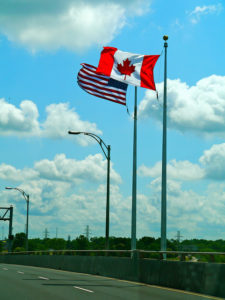
To visit the United States, a visa-exempt Canadian citizen needed a Form I-212 approval because he was previously issued a removal order by an Immigration Judge and thus became subject to a 10-year bar to reentry under INA section 212(a)(9)(A)(ii). He also required a 212(d)(3) nonimmigrant waiver due to a 20-year-old conviction, for which he was found inadmissible under INA sections 212(a)(2)(A) (i)(II)(controlled substance violation) and 212(a)(2)(C)(i)(illicit trafficker in controlled substance).

With my legal representation, he received both a Form I-212 approval and 212(d)(3) nonimmigrant waiver grant from the U.S. Customs & Border Protection in April 2017.  He may now visit the United States as a visa-exempt Canadian citizen.

After the Immigration Court denied his motion to terminate removal proceedings and determined he is removable due to his criminal offense, the Canadian citizen reached out to me for help. Despite being married to a U.S. citizen, he could not obtain a family-based green card or immigrant visa because his criminal record makes him permanently inadmissible and  there is no immigrant waiver for his offense.

He and his U.S. citizen spouse had no choice but to establish a new life in his home country. His spouse, however, continued to hold her American-based job and commute between the two countries for employment purposes.  Being able to travel to the United States and accompany his American kids to see their mother is important to him. He could not re-enter the United States without the necessary permission and waiver.

I guided him on how to prove the favorable factors outweigh the negative factors to get an approval of his Form I-212, Application for Permission to Reapply for Admission into the United States After Deportation or Removal. I also counseled him on how to address the 3 main factors for receiving a 212(d)(3) nonimmigrant waiver: the seriousness of his criminal offense that makes him inadmissible; his reasons for seeking entry into the U.S.; and why he does not pose a risk to the American community.

Facing writer’s block, my client relied on me to help him prepare his affidavit explaining the underlying circumstances that led to his conviction, describing the positive contributions he made in his profession, and the important roles he plays in his family. In addition, I advised him on the documentary evidence to submit to show he deserves the requested I-212 and 212(d)(3) waiver. Because he has an American spouse and previously applied for a marriage-based  green card, for which he is not eligible, he also had to overcome the presumption of immigrant intent to be admitted as a visitor.

Based on the legal briefs and application packets I prepared, the CBP granted both the I-212 and 212(d)(3) nonimmigrant waiver, which permits the Canadian citizen to visit the United States with his American family. Although there were many variables and obstacles in this case, it turned out to be a true success story for Dyan Williams Law PLLC and the client.

Cheers,

Dyan Williams

Founder & Principal Attorney
Dyan Williams Law PLLC
(612) 225-9900
info@dyanwilliamslaw.com

###

This article provides general information only. It is based on law, regulations and policy that are subject to change. Do not consider it as legal advice for any individual case or situation. Each legal case is different and case examples do not constitute a prediction or guarantee of success or failure in any other case. The sharing or receipt of this information does not create an attorney-client relationship.

SUBSCRIBE           CONTACT

Photo by: antefixus21

Grant of Motion to Vacate Inadmissibility (Misrepresentation) Finding + Issuance of F-1 Student Visa = A True Success Story

On February 13, 2017, the U.S. Embassy granted my client’s Motion to Reconsider and Rescind Inadmissibility Determination Under INA 212(a)(6)(C)(i) (willful misrepresentation of material fact to gain immigration benefit) and issued his F-1 student visa. He may now pursue his studies in the United States, starting in fall 2017, after he was previously denied the visa two and a half years ago for misrepresenting information in his application.

The U.S. Embassy approved the motion and F-1 visa request within 3 weeks of when my client appeared for his visa interview and asked for a rescission of the inadmissibility finding.

Prior to the visa interview, I guided him in gathering documentary evidence and preparing his affidavit (written testimony) explaining his reasons for failing to disclose certain information in his prior student visa application. Citing to the record, I prepared the strongest legal briefs in support of a Motion to Reconsider and Rescind Inadmissibility Finding, as well as a 212(d)(3)(A) nonimmigrant waiver application as a backup option.

In his first F-1 student visa application, my client failed to disclose his prior names and previous visit to the United States. After the U.S. Embassy charged him as inadmissible and denied his visa due to misrepresentation, it instructed him to file for a nonimmigrant waiver of inadmissibility.

He did not file for the waiver, but instead hired another attorney to challenge the inadmissibility finding. The attorney submitted a Request for Advisory Opinion to the Visa Office, but did not counsel him to re-apply for the F-1 student visa and appeal directly to the U.S. Embassy to vacate the inadmissibility finding.

By the time he consulted me, he had been waiting for more than 2 years since his first F-1 visa application was denied and more than 1 year since his prior attorney filed the Request for Advisory Opinion (with no decision to date).

A willful misrepresentation charge under section 212(a)(6)(C)(i) permanently bars an applicant from obtaining a visa or entering the United States. To be inadmissible on this ground, he must not only willfully misrepresent information, but the information must also be material to his visa eligibility.

After reviewing my client’s case, I concluded his refusal to disclose information – which was specifically requested on the visa application form – did not affect whether he qualified for the visa. He also had compelling reasons for not providing the information, which had nothing to do with obtaining the visa.

I advised him to re-apply for the F-1 visa and, as option A, file a motion to vacate the inadmissibility finding directly with the U.S. Embassy.  He also agreed to have a 212(d)(3)(A) nonimmigrant waiver request prepared, as option B, in the event the U.S. Embassy denied his motion to vacate.

The U.S. Embassy agreed to vacate the 212(a)(6)(C)(i) charge and issue the F-1 visa after I presented a convincing legal argument, persuasive documentary evidence, and a detailed affidavit from my client showing he needed to enter the United States to attend school, has strong ties to his country, would pose no harm to the community, and did not commit material misrepresentation to be inadmissible.

The 212(d)(3)(A) waiver request was available as an alternative solution, but it normally takes at least four months to process. The client needed to receive his visa by May 1st to confirm attendance at the school, which had deferred his admission for more than two years and could not hold his place beyond fall 2017.

He was relieved and happy when the U.S. Embassy granted the motion to vacate inadmissibility finding and issued the F-1 visa by February 13th, which spared him from using the lengthier waiver application process.

Because the permanent bar to receiving a visa or entering the United States under 212(a)(6)(C)(i) no longer exists, it will be much easier for him to obtain visa renewals and travel to the United States.

My client, who lives in East Asia, communicated with me by Skype initially, and then by telephone and email during the course of representation. At the time he consulted me, he had contacted another attorney to file a 212(d)(3)(A) waiver request. The attorney told him it would take at least 4 months to prepare the waiver application and if he wanted it sooner, he would have to pay a much higher fee. The attorney did not advise him to file a motion to vacate the inadmissibility finding with the U.S. Embassy, even though this was the better option under the circumstances.

I prepared both the motion and the 212(d)(3)(A) waiver request at a reasonable fee within 2 months. The foreign national was pleased with the collaborative process and thankful for the favorable, timely results. This is a true success story in early 2017 for Dyan Williams Law PLLC.

Helping clients overcome visa refusals through the rescission of inadmissibility findings or through waiver grants are among my top areas of expertise. Enabling a foreign national to obtain a visa to enter the U.S. lawfully – especially after he has been deemed inadmissible- takes a lot of time, attention, and work. But the potential benefits are worth the dedicated effort.

Cheers,

Dyan Williams

Founder & Principal Attorney
Dyan Williams Law PLLC
(612) 225-9900
info@dyanwilliamslaw.com

###

This article provides general information only. It is based on law, regulations and policy that are subject to change. Do not consider it as legal advice for any individual case or situation. Each legal case is different and case examples do not constitute a prediction or guarantee of success or failure in any other case. The sharing or receipt of this information does not create an attorney-client relationship.

SUBSCRIBE           CONTACT

Photo by: Tara R.

Grant of Motion to Vacate Expedited Removal Order + Rescission of Misrepresentation Charge = A True Success Story

On November 9, 2016, I received a telephone call from the U.S. Customs & Border Protection (CBP) on a Motion to Vacate Expedited Removal Order I had filed on October 31st (only 9 days earlier). I had appealed to the CBP Field Office, which denied my client admission at the U.S. port of entry, to rescind the removal order and the charge that she willfully misrepresented material fact to gain entry into the U.S. as a visitor.

My client sought entry into the U.S. on a valid B1/B2 visitor visa, which she obtained six months before she married her U.S. citizen spouse. Following the marriage in her home country, she and her elderly parents arrived at an international U.S. airport for a temporary visit. Her American spouse also accompanied them on their first trip to the U.S.

Her plan was to tour the U.S. with her parents and get accustomed to the American lifestyle and culture before she returned to her home country to start the marriage-based immigrant visa process. They had return airline tickets to leave the U.S. within two weeks.

At primary inspection, she and her parents presented the proper travel documents (valid passports) and entry documents (unexpired 10-year, B1/B2 visitor visas) to the CBP officer. While her parents were admitted as visitors, she was pulled into secondary inspection.

During secondary inspection, the CBP officer questioned her about the purpose of her trip. She explained the temporary nature of her visit and, while she was reaching for her return airline ticket, the officer took her personal belongings and searched through them.

Among her personal belongings was a folder containing several documents. In the folder, the CBP officer found two letters from an employer in her home country that were contradictory. The first letter stated she had resigned from her position, indicating she was no longer employed. The second letter stated she was on a leave of absence, implying she still had a job.

She immediately clarified that the second letter contained false information and she had in fact resigned from her job. She described her plans to return to her home country on time and later apply for an immigrant visa, based on her marriage to a U.S. citizen.

Instead of allowing her to withdraw her application for admission due to lack of a proper visa, the CBP detained and interrogated her for at least five hours. She was questioned by two CBP officers until her Sworn Statement was taken about eight hours after she arrived at the airport.

Using a Form I-867A & B, Record of Sworn Statement in Proceedings under Section 235(b)(1) of the Act, the CBP officer documented her testimony in a question and answer format. My client signed the Sworn Statement and initialed each page without fully reading or understanding the contents.

The CBP issued a Form I-860, Notice and Order of Expedited Removal Order, finding her inadmissible, denying her entry, and ordering her expeditiously removed on two counts. The first charge was under INA 212(a)(7)(A)(i)(I), i.e. lack of proper travel documents. The second (and more serious) charge was under INA 212(a)(6)(C)(i), i.e. fraud or willful misrepresentation of material fact to gain admission into the U.S. by presenting a fake letter.

My client was sent back to her country the following day on the next available flight. Her spouse and parents booked airline tickets and returned there as well. A week later, she and her spouse completed a video consultation with me via Skype.

In the consultation, I explained that the expedited removal order, by itself, subjects you to a 5-year bar to reentry. And a charge of fraud/willful misrepresentation under section 212(a)(6)(C)(i) furthers bars you permanently from entering the U.S.

I described the two main options to immigrate to the U.S. following an expedited removal order with a misrepresentation charge.

Option A is to submit a Motion to Vacate the Expedited Removal Order to the CBP Field Office that issued the order. Because this request is, in essence, a motion to reopen or reconsider to the Service, the CBP must receive it within 30 days of the date of the order.

Option A is available if the applicant has factual grounds and legal claims to challenge the CBP’s determination that she is inadmissible to the U.S. and must be expeditiously removed from the U.S.

Option B is to file an  I-212, application for permission to reapply for admission after removal, to overcome the 5-year bar. Plus file an I-601, application for INA 212(i) waiver of inadmissibility, to be excused from the section 212(a)(6)(C)(i) charge – a permanent bar. Both waivers must be filed in conjunction with the immigrant visa application, and are typically submitted at or after the visa interview.

Option B is available if the applicant meets the eligibility requirements for the I-212 waiver and I-601 waiver. To get the I-212 waiver, the applicant must have favorable factors (e.g. close family ties in the U.S.) that outweigh the unfavorable factors (e.g. bad moral character). To receive the I-601 waiver, the applicant needs a qualifying relative (i.e. U.S. citizen or permanent resident spouse or parent) who will suffer extreme hardship if she is not admitted to the U.S.

The foreign national and her American spouse chose Option A as their primary solution, and Option B as their backup plan. Both options require strong documentary evidence, favorable facts, and persuasive legal arguments for an approval to be possible.

During the next three weeks that followed the consultation, I counseled my client and her spouse on the documentary evidence to gather for the request to vacate expedited removal order. The evidence demonstrated the temporary nature of the planned visit, my client’s ongoing ties to her home country, and her and her spouse’s good moral character.

Furthermore, I reviewed the Sworn Statement and Notice and Order of Expedited Removal Order, the agency’s policy manual, and applicable case law to formulate the strongest legal arguments to support the motion.

In the Motion to Expedite Removal Order, I noted that my client had proper travel documents in the form of an unexpired passport and valid visitor visa. I argued she was not inadmissible under INA 212(a)(7)(A)(i)(I) because it was appropriate for her to travel to the U.S. on a valid B1/B2 visa for a temporary visit, even though she was married to a U.S. citizen.

In addition, I explained why the CBP made an error by making a willful misrepresentation charge under INA 212(a)(6)(C)(i). I pointed out that my client did not affirmatively provide the fake leave of absence letter to the CBP officer, who found it during his search of her personal belongings. I added that even if she had misrepresented a material fact, she timely recanted it by admitting the letter contained wrong information and clarifying she was unemployed in her home country.

I pointed out the CBP should have at least given her the opportunity to withdraw her application for admission, rather than issue an expedited removal order that subjected her not only to a 5-year bar, but also to a permanent bar.

The normal processing time for a Motion to Vacate Expedited Removal Order is at least 6 months. To my pleasant surprise, it took less than 10 days for CBP to review the motion and make a decision in this case.

Four days after the CBP Field Office received the motion, a CBP officer telephoned me to convey they were taking the request into serious consideration.

On November 9th, which was 9 days after receiving the motion, the Watch Commander at the CBP Field Office called to say he would vacate the expedited removal order and treat the case as a withdrawal of application for admission to the U.S. He noted that my client was no longer barred from entering the U.S.

The foreign national no longer has a 5-year bar to reentry due to the removal order or a permanent bar to reentry due to the willful misrepresentation charge. She now readily qualifies for a marriage-based immigrant visa without needing any waivers of inadmissibility.

The rescission of the removal order and dismissal of the section 212(a)(6)(C)(i) charge means my client will not need an I-212 waiver or I-601 waiver to get the immigrant visa. This will make it significantly easier and faster for her to immigrate to the U.S. (because waiver requests often take 6 to 12 months to be adjudicated).

My client, her spouse and I communicated by Skype, telephone and email. They decided to hire me upon completing the initial video consultation, in which I laid out a strategy and action plan to resolve their immigration predicament.

Although we never met in person, we worked together effectively to create a desired and expeditious outcome. I continue to represent them in their I-130 immigrant petition and immigrant visa process.

The speedy approval of the request to vacate expedited removal order and dismissal of the misrepresentation charge is a true success story in 2016 for Dyan Williams Law PLLC.

Cheers,

Dyan Williams

Founder & Principal Attorney
Dyan Williams Law PLLC
(612) 225-9900
info@dyanwilliamslaw.com

###

This article provides general information only. It is based on law, regulations and policy that are subject to change. Do not consider it as legal advice for any individual case or situation. Each legal case is different and case examples do not constitute a prediction or guarantee of success or failure in any other case. The sharing or receipt of this information does not create an attorney-client relationship.

SUBSCRIBE           CONTACT

Photo by: Ian D. Keating