Posted onMay 8, 2020|Comments Off on The Incrementalist: A Simple Productivity System to Create Big Results in Small Steps (ebook is out!)
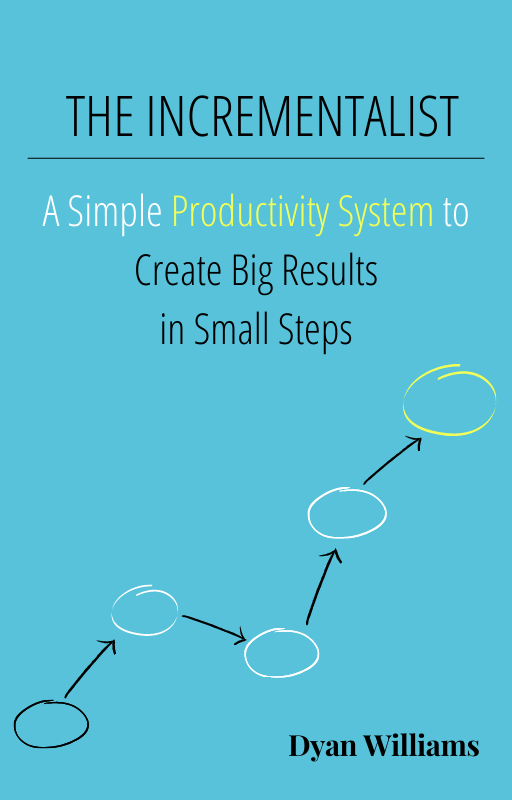
The Incrementalist: A Simple Productivity System to Create Big Results in Small Steps is now out in ebook format. This includes PDF (for computers), EPUB (for phones and tablets) and MOBI (for Kindle). You can take a look inside and read sample pages at https://leanpub.com/incrementalist
This creative project pulled me through feelings of stuckness during the last few weeks of May 2020. As I made my way through it, I was constantly reminded there is healing in grief, possibility in uncertainty, and progress in chaos.
Even though my business and law practice continue to thrive, the world is different. The changes have required logistical shifts, a different mindset, acceptance of what is, and openness to whatever unfolds.
Even when little seems to be going according to plan and much is outside your control, it’s still essential to get your priorities straight, decide on next action steps, and correct course when you veer off track.
In the book, I explain how to become an INCREMENTALIST to create big results, in small steps, without pushing yourself too far beyond your comfort zone, burning out, and feeling inadequate. You can do great work and stretch your limits, gradually and slowly. Incremental progress helps you gain control, master your craft, and seamlessly integrate all that matters to you.
If you’re having trouble gaining traction on a major project or making a significant change in your life, consider reading The Incrementalist and practicing the 5 principles described in the book.
If you like the book or wish to recommend it to friends, family members, colleagues or anyone else who might find it helpful, please share the link at https://leanpub.com/incrementalist.
When you buy the book on Leanpub, you get free updates of any revised versions I publish on that platform. It doesn’t matter when you bought the book or how much you paid.
There is a 45-day 100% happiness guarantee. This means you can get a 100% refund within 45 days of purchase through Leanpub. I won’t know who buys my book or who requests refunds because purchases are made through the Leanpub platform. But if you’d like to send me questions and comments directly, you can do so!
Whether you’re a current client, a former client, a subscriber to one of my e-newsletters, or a reader of any of my blogs, I thank you for your support.
If you read The Incrementalist, let me know the top three things you found most useful and the top three things you’d like me to explain better in the book. I can’t promise I’ll address every question or comment, but I’ll aim to read each one.
In the midst of challenging and uncertain times, you can still create big results in small steps by becoming an Incrementalist!
To your ongoing progress,
Dyan Williams
Founder & Principal Attorney Dyan Williams Law PLLC (612) 225-9900 info@dyanwilliamslaw.com
“The best thing about the future is that it comes one day at a time.” ― Abraham Lincoln
Posted onApril 22, 2020|Comments Off on COVID-19 Update: Impact of Executive Order Temporarily Suspending Some U.S. Immigration for 60 Days, As of April 23
For a 60-day period, the Executive Order suspends and limits the entry of persons as intended immigrants (Immigrant Visa applicants) who are:
(a) outside the United States on the effective date;
(b) do not have an immigrant visa that is valid on the effective date; and
(c) do not have an official travel document other than a visa (such as a transportation letter, a boarding foil, or an advance parole document) that is valid on the effective date or any date thereafter that permits a request for admission at a U.S. port of entry.
If you have an Immigrant Visa dated April 23, 2020 or later — and need to land in the United States to become a permanent resident — you will not be admitted into the country during the 60-day period (i.e. up to June 22, 2020). The exception is if you fall into one of the categories that are exempted from the Order.
Who is Exempted from the Executive Order?
The Order does not prevent the entry of lawful permanent residents who already hold green cards for admission to the United States.
The Order also exempts certain intended immigrants, such as:
(1) Physicians, nurses and other health care professionals seeking to perform medical research or other research intended to combat the spread of COVID-19, or to perform work essential to combating, recovering from, or otherwise alleviating the effects of the COVID-19 outbreak – as determined by the Secretary of State, the Secretary of Homeland Security, or their respective designess – plus their accompanying or following to join spouse and unmarried minor children
(2) Immigrant Investors in the EB5 immigrant visa category
(3) Spouses of U.S. citizens
(4) Minor children (under age 21) of U.S. citizens, or prospective adoptees seeking to enter the United States with an IR-4 or IH-4 visa
(5) Persons whose entry would further U.S. law enforcement objectives, as determined by the Secretary of State, the Secretary of Homeland Security, or their designees, based on a recommendation of the Attorney General or his designee
(6) Members of the U.S. Armed Forces and their spouses and children
(7) Special Immigrant Visas in the SI or SQ classification (i.e. Iraqi and Afghan Translators/Interpreters and their spouses and unmarried minor children)
(8) Persons whose entry would be in the national interest, as determined by the Secretary of State, the Secretary of Homeland Security, or their respective designees
What is the Stated Purpose of the Executive Order?
Trump said the Executive Order was necessary to protect American workers in an economy severely affected by the COVID-19 outbreak.
Between March 1 and April 11, more than that 22 million Americans have filed for unemployment as a result of the global pandemic and related restrictions with behavioral shifts, including closures of “non-essential” businesses and “social distancing” (physical distancing).
The Executive Order states, “We must be mindful of the impact of foreign workers on the United States labor market, particularly in an environment of high domestic unemployment and depressed demand for labor. We must also conserve critical State Department resources so that consular officers may continue to provide services to United States citizens abroad.”
The Order adds, “lawful permanent residents, once admitted, are granted ‘open-market’ employment authorization documents, allowing them immediate eligibility to compete for almost any job, in any sector of the economy. There is no way to protect already disadvantaged and unemployed Americans from the threat of competition for scarce jobs from new lawful permanent residents by directing those new residents to particular economic sectors with a demonstrated need not met by the existing labor supply. ”
What is the Impact of the Executive Order?
While the Executive Order temporarily suspends the entry of some persons who seek to enter the U.S. as immigrants, it exempts certain immigrant visa categories. It does not apply to the K-1 fiancee(e) category, which is a quasi-immigrant or nonimmigrant visa. It also does not prevent the filing of I-130 and I-140 petitions or the processing of such immigrant petitions by USCIS.
Furthermore, delays are already occurring due to global travel restrictions as well as cancellations and unavailability of visa interviews at U.S. Embassies and Consulates related to COVID-19.
The Executive Order will have little immediate impact on intended immigrants — unless U.S. Embassies and Consulates were to restart normal operations, such as scheduling visa interviews and issuing visas, within the next 60 days, or the Order is extended even further or indefinitely.
The text of the Order states: “Whenever appropriate, but no later than 50 days from the effective date of this proclamation, the Secretary of Homeland Security shall, in consultation with the Secretary of State and the Secretary of Labor, recommend whether I should continue or modify this proclamation.”
The Order also notes that additional measures may be taken. It reads, “Within 30 days of the effective date of this proclamation, the Secretary of Labor and the Secretary of Homeland Security, in consultation with the Secretary of State, shall review nonimmigrant programs and shall recommend to me other measures appropriate to stimulate the United States economy and ensure the prioritization, hiring, and employment of United States workers.”
If the suspension is extended beyond the 60-day period or widened to include nonimmigrant visa categories, this could slow down the restarting of routine in-person services at U.S. Embassies and Consulates. In the meantime, Trump has issued guidelines for Opening Up America Again to state and local officials when “reopening their economies, getting people back to work, and continuing to protect American lives.”
The situation remains fluid. Whether the Trump Administration will extend the suspension on U.S. immigration or begin a suspension in nonimmigrant visa cases is uncertain at this point.
Persons who are eligible for adjustment to permanent residence (green card) within the United States are not affected by the Executive Order. USCIS is performing mission critical duties that do not involve contact with the public.
For example, it continues to issue receipt notices, requests for evidence, decisions and other notices for petitions and applications. Although USCIS has suspended in-person services through at least May 3, it is still accepting petitions (e.g. I-130 and I-140 petitions) and applications for processing. The scheduling of interviews and biometrics appointments with applicants will restart after normal operations resume.
###
This article provides general information only. It is based on law, regulations and policy that are subject to change. Do not consider it as legal advice for any individual case or situation. Each legal case is different and case examples do not constitute a prediction or guarantee of success or failure in any other case. The sharing or receipt of this information does not create an attorney-client relationship.
Posted onApril 10, 2020|Comments Off on Maintaining Momentum During a Global Pandemic
The COVID-19 outbreak and restrictions have sparked major changes in just a few weeks. The United States is now deemed the epicenter of the pandemic. More people in my community are now wearing plastic gloves and face masks when they venture out to the grocery store. Daily life is being upended and more businesses have switched to remote work to protect public health and comply with government mandates.
On April 8, in the State of Minnesota, Governor Tim Waltz extended the stay-at-home order through May 4, which restricts people from leaving their homes except for essential activities. Other U.S. states and countries around the world have curfews, self-quarantining directives, and lockdowns of varying degrees. These measures aim to slow the spread of the virus, but they also bring logistical and economic consequences.
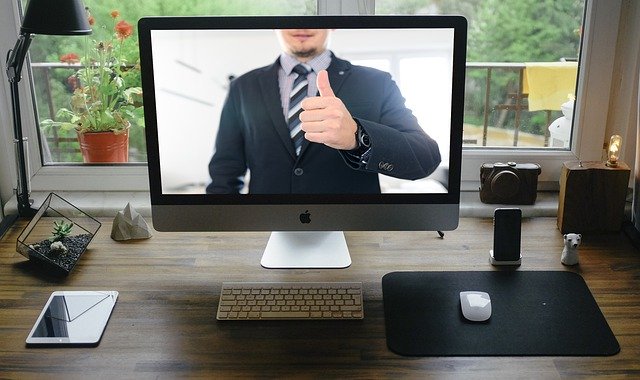
As the situation continues to unfold, remote work is being encouraged or required in both small businesses and large organizations. This is a viable alternative if you’re a knowledge worker who can effectively do tasks and complete projects from home. But if remote work amounts to a sudden shift brought on by forces beyond your control, you will likely struggle to stay focused and productive even if you’re otherwise a peak performer.
While I am not new to remote work because I’ve done it successfully for many years, the impact of the changes is not lost on me. At the most basic level, I’ve had to adjust to having my husband working from home and my older child being home-schooled while I continue to operate my business from my home office. There is more of a blending between work and home life, which calls for doubling down on routines, structures and boundaries.
Many of my clients in U.S. immigration and visa matters have been affected by the suspension of routine services at U.S. Embassies and USCIS offices, triggered by COVID-19. While some U.S. immigration agencies continue to function, the temporary closures and travel restrictions have a profound effect on my clientele.
Although I cannot say when exactly things will go back to or close to “normal,” we know these measures are temporary and will lift at some point in the future.
If you’re a client in my U.S. immigration practice, I thank you for your trust, patience and positivity. I’m behind on some target completion dates, and this is by no means due to procrastination or lack of diligence. But like many others, I’m making progress at a slower pace.
If you’re an attorney or other knowledge worker who can perform duties remotely, I assure you this setup has tremendous advantages. If you’re just starting out with remote work, it might be overwhelming for you, even after all your cybersecurity, document management, online communications, and other systems are installed.
For techniques on how to overcome the 3 big obstacles to thriving in remote work, I encourage you to read my newest articles on my productivity blog:
In the midst of a global pandemic that brings restlenesses and unpredictability, we can continue to set the wheels in motion, take steps forward, and maintain momentum to reach desired results. Look for the silver linings because they are there. You just need to notice them.
As with any other crisis, this too will pass and, in the meantime, you can turn this huge obstacle into a unique opportunity.
Stay well. Stay healthy. Stay connected.
Dyan Williams
Founder & Principal Attorney Dyan Williams Law PLLC (612) 225-9900 info@dyanwilliamslaw.com
Posted onMarch 20, 2020|Comments Off on Staying Present and Productive in the Face of Uncertainty
Staying present and productive can be especially difficult in the face of uncertainty. At the time of my writing this article, many of us in the United States are hunkering down at home to help slow the spread of COVID-19 (Coronavirus Disease 2019).
We each have different ways of coping with challenges and when conditions are largely outside our control. We could feel confident and sure-footed one moment, and then unsure and shaken the next. We might have mixed feelings and conflicting thoughts about the restrictions being imposed by our national government and local authorities to address the COVID-19 situation.
Self-isolation is meant to protect our personal wellness, flatten the curve for the coronavirus transmission, and reduce the impact on the health care system. On the other hand, it has serious, long-lasting repercussions on schools as well as businesses, such as restaurants, coffee shops, bars, theaters, museums, gyms, and recreational centers that rely on in-person attendance and patronage.
For the last 5+ years, I have worked remotely or virtually as a solo lawyer and productivity coach. I communicate with clients and prospects, all around the world, mostly by telephone calls, video conferencing and emails. In-person meetings are rare and usually non-essential. I did not have to adjust to a new setup like others who shifted to remote work in response to COVID-19. In that respect, I am fortunate.
Keeping grounded, sticking with healthy habits, practicing daily routines, getting high-quality sleep and maintaining real connections are just as important, if not more so, in times of uncertainty.
As a person who consciously limits news consumption and social media use, I initially took a head-in-the-sand approach to COVID-19. But as the travel restrictions increased, events got cancelled, schools closed, and certain businesses were ordered to shut down, I began to stay informed.
The trick is to refrain from constantly checking for updates. Once a day in a limited time block is more than enough, and certainly not first thing in the morning or around bedtime. Consuming information is not the same as taking real action.
Just a week ago, I was at the USCIS Field Office in Minneapolis representing clients at their green card interview as a U.S. immigration attorney. My client offered a handshake to the adjudications officer to thank him for approving his case. The officer politely refused and explained the staff was instructed to avoid such contact due to the coronavirus.
After I said goodbye to my clients, I took a walk through Downtown Minneapolis and noticed hand sanitizer dispensers at front desks and elevator doors in office buildings.
Then later that day, I learned that President Trump issued a proclamation restricting entry into the U.S. by most travelers who had been in the Schengen area of Europe for the last 14 days.
Then on Friday, I went to my local Target store and saw many empty shelves, with no toilet paper, facial tissues, hand sanitizers or canned soups available for purchase. (Luckily, these items were not on my shopping list.) People seem to be stockpiling much larger quantities than what the Center for Disease Control (CDC) recommends, i.e. a 14-day supply of food, water and other necessities for every person in the household in the event of a COVID-19 outbreak.
That same day, President Trump proclaimed a national emergency and the Governor of my state, Minnesota, declared a state of emergency to combat the novel coronavirus. It was around this time I started to hear more and more about “social distancing,” which the CDC and other experts say is a key step to preventing the virus spread.
By Monday, March 16, Minnesota schools were closed and I had not only my toddler at home, but also my 1st grader who is now being “homeschooled” and my husband who switched to remote work. Later that day, the Governor ordered all restaurants, food courts, coffeehouses, bars and other places of public accommodation to close, except to offer delivery, take-out, or drive-through service.
We need to acknowledge the current reality, evaluate risks and strengths, and respond effectively to ongoing developments. My productivity is not at its peak. My focus is not as sharp. This is normal in the midst of a global pandemic that touches on daily life.
Still, I am staying present with client matters and keeping track of next steps, targeted completion dates, and deadlines. Although USCIS offices have closed temporarily to the public and some U.S. Consulates have suspended or canceled visa interviews, due to COVID-19, I continue to make steady progress, with the awareness that no crisis is permanent or affects everything.
Many businesses are functioning well and using online technology and other alternatives to fully provide services while limiting in-person contact. As a remote worker, I am operating on the virtual office platform I have held since I started my firm in October 2014. Drop-offs and delivery of mail and packages continue to be accepted and processed at my Downtown Minneapolis office location.
Most people recover from the illness through self-care at home, many with the virus have relatively minor symptoms and a few are asymptomatic, and children are not particularly vulnerable to it. Nevertheless, this global pandemic is expected to be here for a while and brings health risks, emotional angst, and financial challenges.
In the midst of uncertainty, there is unique opportunity to appreciate the privileges we often take for granted, build necessary resilience for setbacks, reassess our priorities, deepen or expand valuable skills, and live more intentionally.
Stay healthy, stay well, Dyan Williams
Founder & Principal Attorney Dyan Williams Law PLLC (612) 225-9900 info@dyanwilliamslaw.com
Posted onMarch 18, 2020|Comments Off on COVID-19 Update: Some U.S. Consulates & Embassies Suspend Operations Until Further Notice
The COVID-19 outbreak has led some U.S. Consulates and Embassies to suspend or cancel visa interviews and stop issuing visas. These changes came after the United States added more travel restrictions to curb the global spread of the novel coronavirus.
A March 18, 2020 statement, titled Suspension of Routine Visa Services, from the U.S. Embassy & Consulate in the Republic of Korea, states: “In response to worldwide challenges related to the outbreak of COVID-19, the Department of State is suspending routine visa services in all countries with a level 2, 3, or 4 U.S. Department of State travel advisory. ” The reasons for travel warnings may range from COVID-19 outbreaks to wars to high crime rates.
Visa applicants must verify the availability of visa interviews at the U.S. Consulate or Embassy that has jurisdiction to review and process their visa request.
For example, a March 13th alert on the U.S. Embassy & Consulates in Canada website states that as of March 17, 2020, it is cancelling all routine nonimmigrant visa appointments. It adds, “The Consulate General in Montreal continues to process immigrant visas but depending on staffing capacity and host government restrictions, may need to reduce routine immigrant visa appointments. We are monitoring the situation closely and will notify applicants as quickly as possible should it be necessary to reschedule.” It states routine nonimmigrant visa services will resume as soon as possible, but provides no specific date at this time.
A March 13th alert on the U.S. Embassy & Consulates in India website, notes “U.S. Mission India posts, in light of the global COVID-19 pandemic, are cancelling immigrant and nonimmigrant visa appointments from March 16, 2020, onward. Your visa appointment stands as cancelled. Once Mission India resumes regular consular operations, appointments will be made available and you will be able to reschedule.”
Earlier on February 3, the U.S. Embassy in Beijing and U.S. Consulates in Chengdu, Guangzhou, Shanghai and Shenyang cancelled routine immigrant and nonimmigrant visa appointments. They have yet to provide a specific date on when routine services will resume.
Each U.S. Embassy or Consulate will make its own decision on whether to suspend visa services, absent a clear directive from a higher authority.
Presidential Proclamations Related to COVID-19
On Friday, March 13, President Trump declared a National Emergency concerning the Novel Coronavirus Disease (COVID-19) Outbreak. See full text here.
The Presidential Proclamations restricting travel related to the COVID-19 outbreak include:
January 31 Proclamation suspending entry to the United States of most foreign nationals who traveled to China within the past 14 days. The proclamation took effect on Sunday, February 2. Read the full text of here.
February 29 Proclamation suspending entry to the United States of most foreign nationals who were physically present in Iran during the 14-day period preceding their entry or attempted entry into the United States. The proclamation took effect on Monday, March 2. Read the full text here.
March 11 Proclamation suspending entry to the United States of most foreign nationals who have been in the Schengen Area during the 14 days prior to their scheduled arrival in the United States. These European countries include Austria, Belgium, Czech Republic, Denmark, Estonia, Finland, France, Germany, Greece, Hungary, Iceland, Italy, Latvia, Liechtenstein, Lithuania, Luxembourg, Malta, Netherlands, Norway, Poland, Portugal, Slovakia, Slovenia, Spain, Sweden, and Switzerland. The proclamation took effect on 11:59 p.m., eastern daylight time on March 13, 2020. Read the full text here.
March 13 Proclamation suspending entry to the United States of most foreign nationals who have been in the United Kingdom and Ireland during the 14 days prior to their scheduled arrival in the United States. The proclamation took effect on 11:59 p.m. eastern daylight time on March 16, 2020. Read the full text here.
Exceptions to the U.S. Travel Restrictions are Limited
U.S. citizens and lawful permanent residents are not subject to the proclamations. Other exceptions include:
certain family members of U.S. citizens or lawful permanent residents: spouses, children (under the age of 21), parents (provided that his/her U.S. citizen or lawful permanent resident child is unmarried and under the age of 21), and siblings (provided that both the sibling and the U.S. citizen or lawful permanent resident are unmarried and under the age of 21).
foreign diplomats traveling to the United States on A or G visas.
air and sea crew traveling to the United States on C, D or C1/D visas.
There is also an exception for visa applicants whose entry would be in the national interest, as determined by the Secretary of State, the Secretary of Homeland Security, or their designees. Such an exception will rarely be approved.
The U.S. Department of States (DOS) has advised that exceptions to the travel restrictions may be presented directly to U.S. Embassies and Consulates where visa applications will be filed.
At some consular posts, visa applicants with urgent travel needs that qualify for an exception under the Presidential Proclamations may request an emergency appointment request. For a general description, read about expedited appointments at the U.S. Embassies in China and India.
Each consular post has its individual application procedures and processes, which are currently very fluid and subject to change.
###
This article provides general information only. It is based on law, regulations and policy that are subject to change. Do not consider it as legal advice for any individual case or situation. Each legal case is different and case examples do not constitute a prediction or guarantee of success or failure in any other case. The sharing or receipt of this information does not create an attorney-client relationship.